
Function and benefits of anthocyanins: what research shows
 Written byRein Ridder
 Reviewed bySamo Borko | Biochemist and Expert Formulator at Purovitalis
What are anthocyanins, and what do they do? Anthocyanins are the water-soluble pigments that make berries, red grapes, red cabbage and other plants red, purple or blue. In people, research looks at them mainly in relation to blood vessels, blood lipids, blood sugar, memory and the gut. Results differ between healthy people and people with metabolic risk factors, and no health claim for anthocyanins is authorised in the EU.
Anthocyanins belong to the flavonoids, a large group of plant compounds, and people take them in through food, mainly dark berries and purple vegetables. This article goes through what research has looked at, area by area, and how strong that research is.
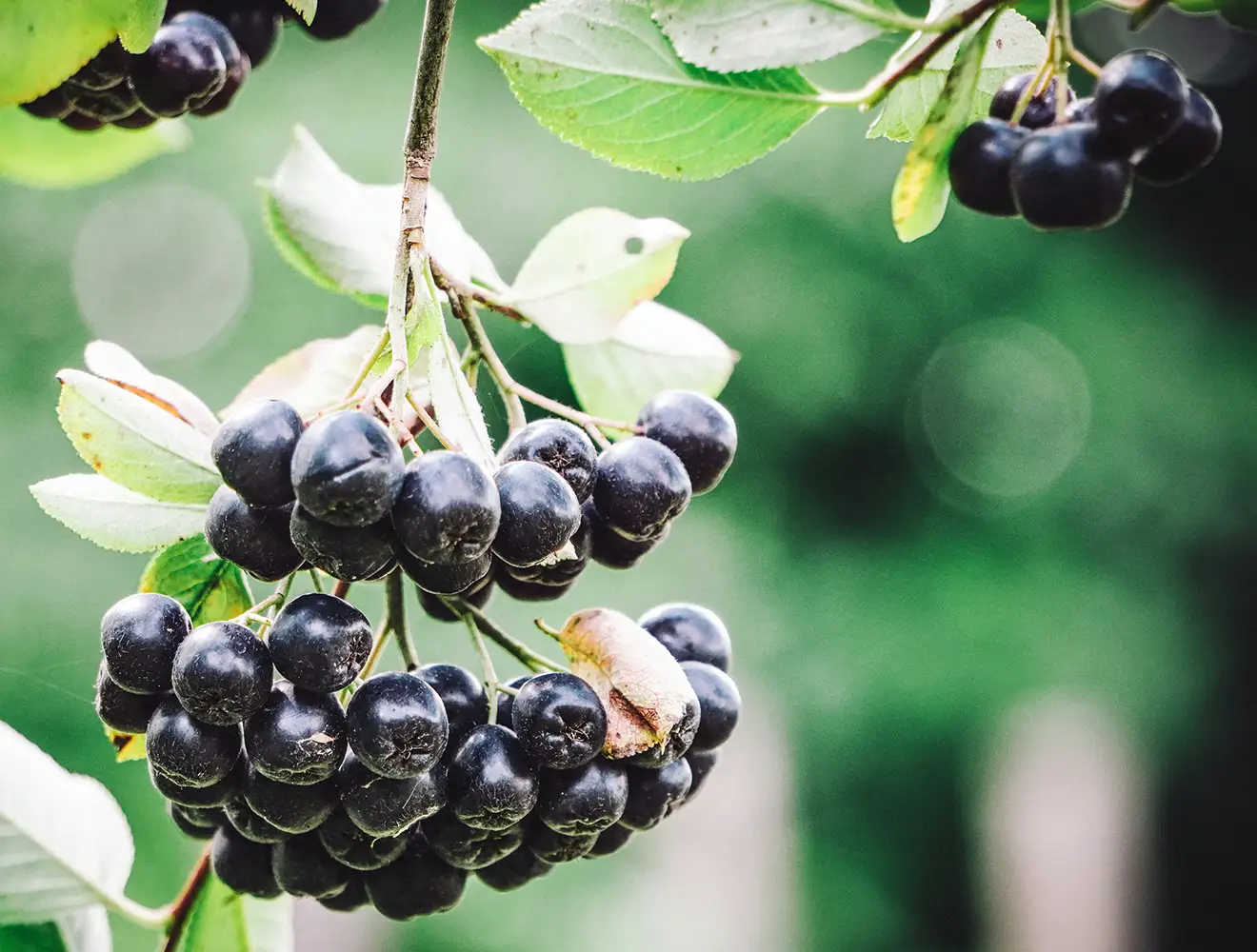
How anthocyanins function in the body
Only part of the anthocyanins in food is absorbed as such. Much of what is taken in is broken down, by the body and by gut bacteria, into smaller compounds such as phenolic acids, and researchers think some of the effects seen in the body may come from these breakdown products rather than from the anthocyanins themselves.
In a 2013 study, eight men took 500 mg of a labelled anthocyanin (cyanidin-3-glucoside), so researchers could follow where it went. On average, about 12 percent of the labelled carbon was found back in urine and breath, which the researchers used as a measure of how much was absorbed; that was more than earlier studies had suggested. Breakdown products were found in the blood for up to 48 hours. It was a small study with one anthocyanin, so it gives an idea of how they are handled, not exact figures for every food.
Studies on anthocyanins
Most research on anthocyanins has been done in cells and animals. In people, there are two main kinds of study: observational studies that compare how much anthocyanin people eat with their health years later, and randomised trials that give berries, juices, powders or extracts and compare them with a placebo.
Several meta-analyses, which pool the results of many trials, have appeared since 2025. They form the basis of this article, because single small trials often point in different directions. Newer topics are still at an early stage. For example, a 2025 review brings together cell and animal research on anthocyanins and the effects of micro- and nanoplastics on reproduction; we found no studies in people on this.
Which benefits of anthocyanins are being studied?
No health claim for anthocyanins is authorised in the EU. Research covers the heart and blood vessels, blood lipids, blood sugar, the brain, the gut and the skin. The table summarises each area and the kind of research behind it.
| Area | Research so far | What was found |
|---|---|---|
| Blood vessels | Meta-analysis of 65 trials in healthy adults | Changes in how well arteries widen (flow-mediated dilation) |
| Blood pressure | Meta-analyses of trials in healthy adults and in people with metabolic risk factors | No overall change in either group |
| Blood lipids | Meta-analyses of trials | Changes in people with metabolic risk factors; no change in healthy adults |
| Blood sugar | Meta-analyses of trials; review of trials in type 2 diabetes | Changes in fasting glucose and HbA1c in people with metabolic risk factors; no change in glucose or HbA1c in healthy adults |
| Memory and attention | Two meta-analyses of trials | Mixed results, large differences between studies |
| Gut bacteria | Mostly laboratory and animal studies | How anthocyanins and gut bacteria affect each other |
| Skin | Mostly cell and animal studies | Skin changes after UV exposure |
| Body weight | Meta-analysis of trials | No change in weight, BMI or waist circumference |
The sections below go through each area. A pattern runs through them: changes are more often found in people with metabolic risk factors, such as high blood lipids or blood sugar, than in healthy adults.
Anthocyanins and blood pressure
A 2026 meta-analysis pooled 65 randomised trials in healthy adults. Anthocyanins from food or extracts did not change blood pressure. What did change was flow-mediated dilation, a measure of how well an artery widens when more blood flows through it, both after a single intake and after longer use.
In a 2025 meta-analysis of 29 trials in people with risk factors for metabolic syndrome, blood pressure did not change overall either. In subgroups it went up in some and down in others, depending on the amount, the duration, the health of the participants and the type of product.
Anthocyanins, cholesterol and the heart: what research shows
The 2025 meta-analysis included 2,006 people with metabolic risk factors. After anthocyanins, LDL cholesterol, total cholesterol and triglycerides were lower, and HDL cholesterol was higher, than after placebo. The authors call for larger and longer trials before firm conclusions can be drawn. In the 2026 meta-analysis of healthy adults, blood lipids did not change.
The 2026 review also pooled 18 long-term cohort studies. People who habitually ate the most anthocyanins had a lower risk of cardiovascular disease and heart attack than people who ate the least. Observational studies like these show an association, not cause and effect, because people who eat more berries may differ in other ways too. The review was partly funded by the US Highbush Blueberry Council.
Anthocyanins and blood sugar: what was measured?
In the 2025 meta-analysis of people with metabolic risk factors, fasting blood glucose and HbA1c, a measure of average blood sugar over the past months, were lower after anthocyanins than after placebo. Insulin levels and insulin resistance did not change. In healthy adults, blood glucose and HbA1c did not change; fasting insulin was slightly lower in one analysis.
A 2024 narrative review of 18 recent clinical studies in people with or at risk of type 2 diabetes describes similar changes. Its authors note that the trials were short and small and used different products and amounts, and that the best duration is still an open question.
Anthocyanins, memory and attention
Memory and attention have been tested in randomised trials with berries, juices and extracts. A 2026 meta-analysis of 59 trials found changes in overall test scores and in several areas, such as attention, processing speed and memory, compared with control groups. For several of those areas, results differed widely between studies. The authors also found signs that smaller positive studies may be overrepresented; after correcting for this, two of the areas no longer showed a clear difference. They call for more well-designed trials.
An earlier meta-analysis from 2025, which pooled 14 trials, found no clear effect on working memory, immediate or delayed memory, or verbal learning. The two reviews pooled different selections of trials and used different methods, so the evidence on memory is still mixed.
Anthocyanins in antioxidant tests
Anthocyanins react strongly in laboratory tests for antioxidant activity. A 2024 critical review describes these tests and studies in cells and animals, and also how anthocyanins may act indirectly, through the body’s own defence systems. It discusses the limits of laboratory tests and of the markers used to measure such effects, so a strong result in a test tube does not always reflect what happens in the body.
Anthocyanins and gut bacteria
Because only part of the anthocyanins is absorbed higher up, much of the rest reaches the large intestine, where gut bacteria break it down. A 2025 review describes research on how anthocyanins and gut bacteria affect each other, including changes in which bacteria are present and in the compounds they produce. Most of this research is in the laboratory and in animals.
Anthocyanins benefits for skin
Skin research on anthocyanins focuses on photoageing, the skin changes caused by long-term sun exposure, such as dryness, roughness and pigmentation. A 2024 review brings together this research. Most of it was done in cells and animals, and the review also describes forms such as liposomes, which researchers use to make anthocyanins more stable. We found no meta-analysis of skin trials in people.
Anthocyanins and body weight: what was measured?
In the 2025 meta-analysis of 29 trials, body weight, BMI and waist circumference did not change overall with anthocyanins compared with placebo. A 2025 umbrella review, which summarised earlier meta-analyses, reported lower fat mass, but noted that the quality of the evidence is often limited.
Find what fits you
Answer a few short questions and discover which supplements match your goals and daily routine.
Find your supplementSide effects and dosage of anthocyanins
There is no official daily reference intake for anthocyanins. People take them in through food: in the US Department of Agriculture data, 100 grams of raw blueberries contain about 150 to 165 mg, measured as anthocyanidins.
See the table of anthocyanin-rich foods
Trials have used whole berries, juices, powders and extracts. The 2026 meta-analysis in healthy adults included trials that provided at least 50 mg a day, an amount its authors describe as achievable through diet.
Anthocyanins are a normal part of the diet and are also used as a food colour (E 163). The meta-analyses described here looked at effects rather than side effects, and data on long-term use of concentrated extracts are limited. As noted above, blood pressure went up in some subgroups of one meta-analysis. If you are pregnant or breastfeeding, or take medication, ask your doctor or pharmacist before you take an anthocyanin supplement.
Are anthocyanin supplements different from food?
Supplements usually contain an extract of berries or other plants, standardised to an amount of anthocyanins. Whole foods also provide fibre and other plant compounds, which an extract may not. The meta-analyses above pooled foods and extracts, so they cannot show which form makes more difference.
Anthocyanins and dietary labels
Anthocyanins come from plants, so the compounds themselves are vegan. Whether a supplement is vegan or halal depends on the rest of the product. Some extracts are made with alcohol, and capsules can be made of gelatine, which comes from animals. Check the ingredient list, or a vegan or halal certificate if that matters to you.
Anthocyanins in brief
Anthocyanins are the pigments that colour berries and purple vegetables red, purple or blue. Only part is absorbed as such; much is broken down by the body and by gut bacteria into smaller compounds.
In trials, changes in blood lipids and blood sugar were found mainly in people with metabolic risk factors, while in healthy adults the clearest change was in how well arteries widen. Blood pressure and body weight did not change overall, and results on memory are mixed. No health claim for anthocyanins is authorised in the EU.
Anthocyanins are one of the ingredients in:
Frequently asked questions
Anthocyanins are water-soluble plant pigments that belong to the flavonoids. They give berries, red grapes, red cabbage and purple sweet potato their red, purple or blue colour. There are many different anthocyanins, built on six common anthocyanidins, such as cyanidin and delphinidin.
No health claim for anthocyanins is authorised in the EU. Research looks at blood vessels, blood lipids, blood sugar, memory and the gut. Trials found changes in some of these measures, mostly in people with metabolic risk factors; in healthy adults, blood pressure, blood lipids and blood sugar did not change.
Anthocyanins are a normal part of the diet and are also used as a food colour (E 163). The meta-analyses described in this article looked at effects rather than side effects, and data on long-term use of concentrated extracts are limited. If you are pregnant or breastfeeding, or take medication, ask your doctor or pharmacist before you take a supplement.
In a 2025 meta-analysis of 29 randomised trials in people with metabolic risk factors, body weight, BMI and waist circumference did not change overall with anthocyanins compared with placebo.
The anthocyanins themselves come from plants. Whether a supplement is vegan or halal depends on the rest of the product, such as the capsule and how the extract was made. Check the ingredient list, or a vegan or halal certificate if that matters to you.
In the US Department of Agriculture data, dark berries such as black raspberries, elderberries, chokeberries (aronia) and bilberries are among the richest, followed by red cabbage, blueberries and blackcurrants. 100 grams of raw blueberries contain about 150 to 165 mg, measured as anthocyanidins.
References
- Czank C, et al. (2013). Human metabolism and elimination of the anthocyanin, cyanidin-3-glucoside: a 13C-tracer study. American Journal of Clinical Nutrition, 97(5), 995-1003. https://pubmed.ncbi.nlm.nih.gov/23604435/
- Zhang J, et al. (2025). Exploring the potential protective role of anthocyanins in mitigating micro/nanoplastic-induced reproductive toxicity: a steroid receptor perspective. Journal of Pharmaceutical Analysis, 15(2), 101148. https://pubmed.ncbi.nlm.nih.gov/39925697/
- Avendano EE, et al. (2026). Dietary intakes of anthocyanins and cardiometabolic health: a systematic review and meta-analysis of randomized trials and prospective cohort studies in healthy participants. American Journal of Clinical Nutrition, 124(2), 101304. https://pubmed.ncbi.nlm.nih.gov/42547104/
- Pan J, et al. (2025). Effect of dietary anthocyanins on the risk factors related to metabolic syndrome: a systematic review and meta-analysis. PLoS One, 20(2), e0315504. https://pubmed.ncbi.nlm.nih.gov/39928643/
- Kozłowska A, Nitsch-Osuch A. (2024). Anthocyanins and type 2 diabetes: an update of human study and clinical trial. Nutrients, 16(11), 1674. https://pubmed.ncbi.nlm.nih.gov/38892607/
- Micek A, et al. (2026). The effect of anthocyanins and anthocyanin-rich foods on cognitive function: a meta-analysis of randomized controlled trials. GeroScience, 48(5), 6929-6963. https://pubmed.ncbi.nlm.nih.gov/41351717/
- Lorzadeh E, et al. (2025). The effect of anthocyanins on cognition: a systematic review and meta-analysis of randomized clinical trial studies in cognitively impaired and healthy adults. Current Nutrition Reports, 14(1), 23. https://pubmed.ncbi.nlm.nih.gov/39875765/
- Sadowska-Bartosz I, Bartosz G. (2024). Antioxidant activity of anthocyanins and anthocyanidins: a critical review. International Journal of Molecular Sciences, 25(22), 12001. https://pubmed.ncbi.nlm.nih.gov/39596068/
- Chen Y, et al. (2025). Interactions between anthocyanins and gut microbiota in promoting healthy aging. Journal of Future Foods, 5(3), 229-238. https://doi.org/10.1016/j.jfutfo.2024.07.002
- Guo X, et al. (2024). Exploring the potential of anthocyanins for repairing photoaged skin: a comprehensive review. Foods, 13(21), 3506. https://pubmed.ncbi.nlm.nih.gov/39517290/
- Liu X, et al. (2025). Effects of anthocyanins on human health: an umbrella review of systematic reviews and meta-analyses. Food & Function, 16(19), 7531-7544. https://pubmed.ncbi.nlm.nih.gov/40963364/
- US Department of Agriculture. (2018). USDA Database for the Flavonoid Content of Selected Foods, Release 3.3. https://www.ars.usda.gov/arsuserfiles/80400535/data/flav/flav3.3.pdf
Add Purovitalis as a preferred source on Google Google then shows more of our articles in your search results.

 English
 Dutch
 German
 French
 Spanish
 Romanian
 Danish
 Italian