
Sources of anthocyanins: top foods and supplement forms
 Written byKarina Ahrenholt
 Reviewed bySamo Borko | Biochemist and Expert Formulator at Purovitalis
Anthocyanins are natural pigments produced by plants, giving fruits and vegetables like blueberries, red cabbage, black carrots and purple corn their deep red, purple and blue tones. You find the most in dark berries such as elderberries, chokeberries, bilberries, blackcurrants and blueberries, and in purple vegetables such as red cabbage. Red, purple and blue foods are a rough guide, but the amount differs a lot between varieties.
What are anthocyanins?
Anthocyanins are water-soluble pigments that belong to the flavonoids, a large group of plant compounds. There are many different anthocyanins, built on six common anthocyanidins: cyanidin, delphinidin, malvidin, pelargonidin, peonidin and petunidin. In the plant, they colour flowers and fruit and help protect leaves against strong light and other stress.
Their colour depends on acidity: anthocyanins look red in acidic conditions, purple in neutral conditions and blue to green in alkaline conditions. That is why red cabbage can turn blue or green when it is cooked with something alkaline, and red when vinegar or lemon juice is added.
Anthocyanins in plants and wild herbs
Anthocyanins are not limited to fruit and vegetables. They are widespread across the plant kingdom and occur in flowers, leaves, stems and roots, often in the outer cell layers. Some wild herbs and weeds contain them too, especially those with red or purple colouring. Not all of these plants are edible.
Anthocyanins rich foods
How much anthocyanin a food contains depends on the variety, climate, growing location, ripeness at harvest and storage. The table shows average values from the US Department of Agriculture’s flavonoid database, per 100 grams of raw food. They are measured as anthocyanidins, the coloured core of the molecule, so figures in other sources, which count whole anthocyanins, can be higher.
| Food | Anthocyanins per 100 g |
|---|---|
| Elderberries | 485 mg |
| Chokeberries (aronia) | 350 mg |
| Bilberries | 285 mg |
| Red cabbage, raw | 210 mg |
| Blueberries, cultivated | 163 mg |
| Blackcurrants | 158 mg |
| Blueberries, wild | 150 mg |
| Blackberries | 101 mg |
| Redcurrants | 75 mg |
| Cranberries, raw | 68 mg |
| Radishes, raw | 63 mg |
| Açaí berries, fresh | 54 mg |
| Raspberries | 49 mg |
| Red grapes | 48 mg |
| Sour cherries | 33 mg |
| Sweet cherries | 32 mg |
| Strawberries | 27 mg |
| Purple plums | 23 mg |
| Red onions | 10 mg |
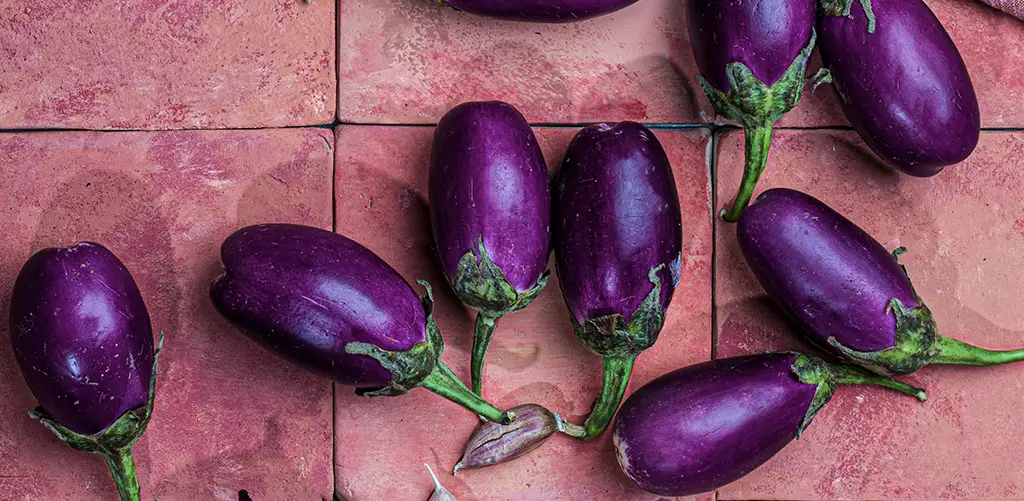
Purple and blue fruit and vegetables that contain anthocyanins include elderberries, aronia, blackcurrants, blueberries, blackberries, purple grapes, cherries, red cabbage, red onions, radishes, aubergine skin, purple sweet potato, black carrots and purple corn.
Anthocyanins in fruits and berries
Dark berries contain the most anthocyanins per 100 grams. In blueberries they sit mainly in the skin; in bilberries, aronia and elderberries the flesh is coloured too. Elderberries and chokeberries top the USDA list, followed by bilberries, blackcurrants and blueberries. Cherries, red grapes and strawberries contain less.
Blackberries are full of anthocyanins
Blackberries contain about 100 mg of anthocyanins per 100 grams in the USDA data, almost all of it as cyanidin, the most common anthocyanidin in fruit. Values differ between varieties and with ripeness.
Mulberries and anthocyanins
Mulberries grow on trees and come with dark purple to black, red or white fruit; darker fruit usually contains more anthocyanins. In a Korean study that grew 12 mulberry cultivars under the same conditions, anthocyanin content differed widely: the cultivar Daeja contained very little, while Iksu and Shimgang contained the most. The main anthocyanin was cyanidin-3-glucoside, which also occurs in blackberries and blackcurrants.
Blueberries and anthocyanin content
Cultivated blueberries contain about 160 mg of anthocyanins per 100 grams in the USDA data, and wild blueberries about 150 mg. Unlike blackberries, blueberries contain a mix of anthocyanins, mainly based on malvidin, followed by delphinidin and petunidin.
Cherries as a source of anthocyanins
Both sour and sweet cherries contain about 30 mg of anthocyanins per 100 grams in the USDA data: a little more than strawberries and much less than dark berries. Dark cherry varieties usually contain more than pale ones, and dried or frozen sour cherries contained less than fresh ones in the USDA data.
Grapes with high anthocyanin levels
In most red and black grapes, the anthocyanins sit in the skin, while the flesh is pale. Teinturier grapes are an exception: they have red flesh as well. A Hungarian study compared 15 of these red-fleshed varieties and found large differences in anthocyanin content between them, both in the skin and in the juice.
Does wine contain anthocyanins too?
Yes. Red wine gets its colour from the anthocyanins in grape skins, which are released when the skins stay in contact with the juice during fermentation. As red wine ages, the anthocyanins gradually react with other compounds, which is why its colour changes over time. Drinking alcohol is not a sensible way to increase your anthocyanin intake.
Vegetables with anthocyanins
Several vegetables contain the same pigments as dark berries. Red cabbage is the richest common vegetable source, at about 210 mg per 100 grams raw in the USDA data. Radishes, red onions, aubergine skin, purple sweet potato, black carrots and purple corn also contain anthocyanins.
Red cabbage and its stable anthocyanins
Red cabbage contains mainly acylated anthocyanins: anthocyanins with an extra organic acid attached. That makes them more stable to heat and changes in acidity than the anthocyanins in most fruits, which is why red cabbage extract is used as a natural food colouring.
Purple sweet potato anthocyanins
Purple sweet potatoes owe their colour to anthocyanins, most of them acylated, like those in red cabbage. In a Korean study of five purple sweet potato varieties, the outer layer of the peeled tuber contained more anthocyanins than the inner flesh in four of them. Purple sweet potato is also used as a source of natural food colouring.
Does beetroot contain anthocyanins?
No. Beetroot looks as if it should, but its red pigment comes from betalains, a different group of pigments. Betalains and anthocyanins have never been found together in the same plant, so beetroot does not count as a source of anthocyanins. Beetroot is studied for other compounds, such as betalains and nitrate.
Find what fits you
Answer a few short questions and discover which supplements match your goals and daily routine.
Find your supplementDo anthocyanins survive cooking?
Partly. Anthocyanins are sensitive to heat, light, oxygen and changes in acidity, and because they dissolve in water, part of them ends up in the cooking water. In a Chinese study of red cabbage, boiling lowered the anthocyanin content more than steaming did. The acylated anthocyanins in red cabbage and purple sweet potato hold up better than those in most berries.
Anthocyanins as supplements?
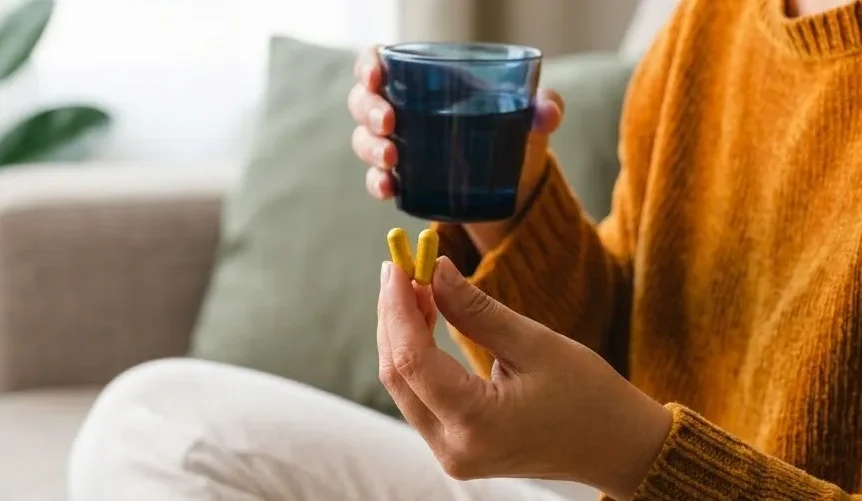
Anthocyanin supplements are usually made from berry extracts, for example from bilberry, blackcurrant, elderberry or aronia, and are sold as capsules, tablets or powders. Food also brings fibre, vitamins and other plant compounds, which is why most nutrition advice starts with fruit and vegetables. What research has studied with anthocyanin supplements is covered in our article on anthocyanin research.
Read more about anthocyanins and research
Do you use medication, are you pregnant or breastfeeding, or do you have a medical condition? Then discuss the use of supplements with a doctor or pharmacist.
Anthocyanins in food in brief
Anthocyanins are the water-soluble pigments that make many fruits and vegetables red, purple or blue. Per 100 grams, elderberries, chokeberries, bilberries, red cabbage, blueberries and blackcurrants contain the most; cherries, grapes and strawberries contain less. Beetroot gets its colour from betalains, not anthocyanins. Anthocyanins are sensitive to heat and dissolve in cooking water, so raw or briefly cooked foods keep more of them.
Frequently asked questions
Anthocyanins are water-soluble plant pigments from the flavonoid group. They give fruits and vegetables such as blueberries, blackcurrants and red cabbage their red, purple or blue colour.
Among common foods in the USDA flavonoid database, elderberries and chokeberries contain the most per 100 grams, followed by bilberries, red cabbage, blueberries and blackcurrants.
No. The red colour of beetroot comes from betalains, a different group of pigments.
Yes. Anthocyanins are one of the subgroups of the flavonoids, a large group of plant compounds.
Partly. They are sensitive to heat and dissolve in cooking water, so boiling lowers the amount more than steaming or eating the food raw.
Red cabbage, red onions, radishes, aubergine skin, purple sweet potato and black carrots; purple corn is a grain that contains them too.
References
- Fu Y, et al. (2020). Red beetroot betalains: perspectives on extraction, processing, and potential health benefits. Journal of Agricultural and Food Chemistry, 68(42), 11595-11611. https://pubmed.ncbi.nlm.nih.gov/33040529/
- Ghareaghajlou N, Hallaj-Nezhadi S, Ghasempour Z. (2021). Red cabbage anthocyanins: stability, extraction, biological activities and applications in food systems. Food Chemistry, 365, 130482. https://pubmed.ncbi.nlm.nih.gov/34243124/
- Haytowitz DB, Wu X, Bhagwat S. (2018). USDA Database for the Flavonoid Content of Selected Foods, Release 3.3. U.S. Department of Agriculture, Agricultural Research Service. https://www.ars.usda.gov/ARSUserFiles/80400525/Data/Flav/Flav3.3.pdf
- Im YR, Kim I, Lee J. (2021). Phenolic composition and antioxidant activity of purple sweet potato (Ipomoea batatas (L.) Lam.): varietal comparisons and physical distribution. Antioxidants, 10(3), 462. https://pubmed.ncbi.nlm.nih.gov/33809444/
- Kim I, Lee J. (2020). Variations in anthocyanin profiles and antioxidant activity of 12 genotypes of mulberry (Morus spp.) fruits and their changes during processing. Antioxidants, 9(3), 242. https://pubmed.ncbi.nlm.nih.gov/32192116/
- Kőrösi L, et al. (2022). Comparative study on grape berry anthocyanins of various teinturier varieties. Foods, 11(22), 3668. https://pubmed.ncbi.nlm.nih.gov/36429259/
- Tan S, Lan X, Chen S, et al. (2023). Physical character, total polyphenols, anthocyanin profile and antioxidant activity of red cabbage as affected by five processing methods. Food Research International, 169, 112929. https://pubmed.ncbi.nlm.nih.gov/37254355/
- Mattioli R, et al. (2020). Anthocyanins: a comprehensive review of their chemical properties and health effects on cardiovascular and neurodegenerative diseases. Molecules, 25(17), 3809. https://pubmed.ncbi.nlm.nih.gov/32825684/
Add Purovitalis as a preferred source on Google Google then shows more of our articles in your search results.


 English
 Dutch
 German
 French
 Spanish
 Romanian
 Danish
 Italian