
What Apple Watch Series 11 means for healthy aging
 Written byKarina Ahrenholt
 Reviewed bySamo Borko | Biochemist and Expert Formulator at Purovitalis
table of contents
- Healthspan metrics Apple Watch Series 11 can track
- Apple Harvard Study – the science behind health tracking
- Taking further steps for longevity
The Apple Watch Series 11 has arrived, and and if you ask us it’s more than just a sleek upgrade.
With a longer-lasting battery, smoother performance powered by Apple Intelligence, and smarter translation tools, Apple has once again refined the daily smartwatch experience.
Yet beyond convenience and style, the most transformative update is in the field of health and longevity, where the Apple Watch Series 11 truly sets itself apart.
For years, Apple Watches have tracked steps, sleep, and heart rate. Now, with the Apple Watch Series 11 heart rate monitor working alongside new health features, Apple is entering a new phase: healthspan metrics tracking.
The new watch brings features that look directly at some of the most important markers of healthy aging, giving users insights that go far beyond fitness.
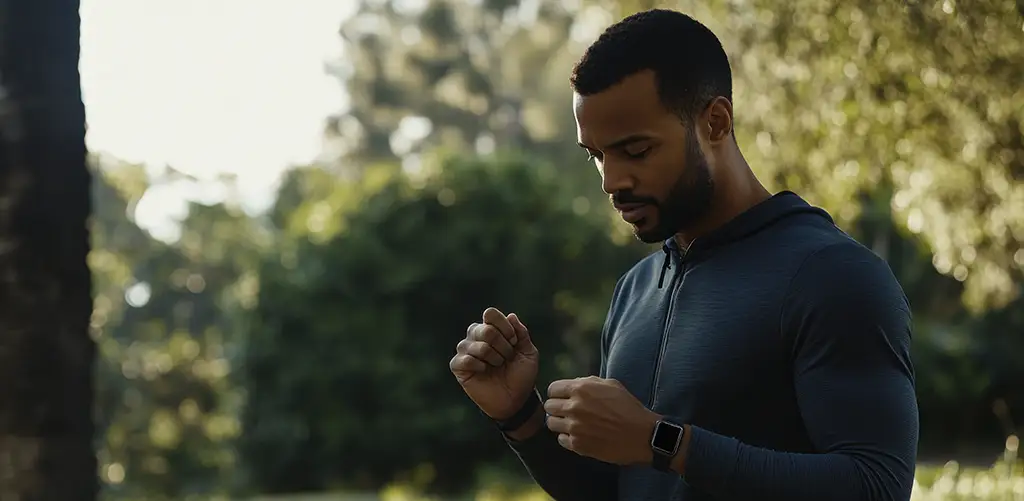
Healthspan metrics Apple Watch Series 11 can track
The Apple Watch Series 11 goes beyond fitness, offering new features like blood pressure tracking, advanced sleep scoring, more stable blood oxygen measurements, and workout recovery coaching. These changes turn it into a daily tool for monitoring key markers of health and longevity.
Hypertension
High blood pressure, or hypertension, is one of the strongest predictors of cardiovascular disease and premature aging. Detecting patterns early can make a real difference in longevity.
The Apple Watch Series 11 introduces an improved blood pressure monitoring system. While it doesn’t replace a medical-grade cuff, it can identify trends, highlight unusual spikes, and encourage users to take action before problems escalate.
For those aiming to improve cardiovascular health, lifestyle adjustments like exercise and lower salt intake matter greatly, but supplements such as berberine can also support healthy blood pressure regulation.
Read more about berberine and its effect on cardiovascular health here: Berberine Guide: Benefits, Side Effects, and Dosage
Tracking sleep
Sleep is a cornerstone of health and longevity. Poor sleep has been linked to memory decline, metabolic problems, and accelerated cognitive aging.
Will the Apple Watch Series 11 give advice on how to make your sleep more restorative? With watchOS 26, Apple has introduced Sleep Score, a system that provides an overall assessment of sleep quality — not just sleep duration. The score is based on multiple factors: how long you sleep, how often your rest is disrupted, how consistent your bedtime is, and how your night is divided across sleep stages.
Apple Watch relies on its sensors — measuring movement, heart rate, respiration, and blood oxygen — to estimate sleep stages such as Deep, REM, and Core, as well as nighttime interruptions. While the feature was announced alongside Series 11, it is not exclusive to the newest model; any Apple Watch compatible with watchOS 26 will benefit from this update.
For those looking to improve their sleep, consistent routines, screen-free evenings, and supplements like GlyNAC can help restore energy balance and support deeper, more restorative sleep, find out why in our blog: GlyNAC and sleep improvement
Read all about Sleep and longevity here: Sleep for longevity
Blood oxygen
Oxygen saturation (SpO2) is a vital measure of how efficiently your body delivers oxygen to tissues. A consistently low reading can point to problems in the lungs, heart, or even sleep patterns.
The Apple Watch Series 11 blood oxygen sensor has been updated to provide more stable and accurate readings. Users can now perform regular spot checks or rely on background monitoring for a more complete picture.
Ideally, blood oxygen levels should remain between 95–100%. Exercise, spending time outdoors, and supplements like NMN and resveratrol—which support mitochondrial function and oxygen utilization—can help maintain a healthy score.
Workout experience
Exercise is one of the most powerful levers for longevity, but the real key is balance: training hard while also recovering properly. Apple Watch Series 11 will adapt its coaching to your energy level during a workout, and the fact that the device can handle tough workout conditions helps a lot.
With the help of Apple Watch Series 11 Apple Intelligence, workouts are turned into personalized coaching sessions. The watch doesn’t just track time and distance; it evaluates recovery markers, helps prevent overtraining, and adapts recommendations to your progress. For anyone focused on long-term health, this provides a smarter and more sustainable way to exercise. For more insights into exercise and longevity, read the blog here: Exercise for Longevity.
To give a clearer overview, here are the main healthspan markers tracked by the Apple Watch Series 11 and why they matter for healthy aging:
| Health marker | What it tracks | Why it matters for healthy aging | How you can support it |
|---|---|---|---|
| Blood Pressure | Trends and unusual spikes | Early detection of cardiovascular risks | Exercise, lower salt intake, quercetin, berberine |
| Sleep Quality | Duration, sleep stages, interruptions | Poor sleep is linked to faster cognitive decline | Consistent routines, screen-free evenings, GlyNAC |
| Oxygen Saturation | Oxygen levels in the blood | Low levels may signal heart or lung issues | Exercise, fresh air, NMN, resveratrol |
| Training & Recovery | Workout intensity and recovery markers | Prevents overtraining and supports long-term fitness | Balanced training, proper recovery |
Apple Harvard Study – the science behind health tracking
Beyond the Apple Watch Series 11 changes, Apple has launched something even bigger: a five-year research collaboration with Harvard Medical School and Brigham and Women’s Hospital, known as the Apple Harvard Study.
This study is designed to validate Apple’s health metrics at scale, exploring how wearable technology can detect early signs of chronic disease and provide scientific insights into longevity. Unlike the watch itself, the study isn’t about one specific model. Instead, it covers Apple’s entire health ecosystem, gathering data from millions of users worldwide.
For the longevity field, this is an exciting step. It signals that one of the world’s largest tech companies is investing seriously in research, making health data a cornerstone of future science. With billions of data points collected over the next five years, this collaboration could reshape how we understand the links between lifestyle, health, and aging.
Taking further steps for longevity
While the Apple Watch Series 11 can track valuable healthspan metrics, the real impact comes when users act on those insights. Optimizing longevity means addressing the hallmarks of aging—mitochondrial function, inflammation, cellular repair, and more. Nutrition, exercise, and stress management remain the foundation, but targeted support can strengthen these efforts: NMN for NAD+ levels, resveratrol for cellular protection, GlyNAC for energy balance and sleep quality, collagen for joints and skin, and spermidine for cellular renewal.
To make sense of these complex interactions, technology plays an important role. That’s where Aura, Purovitalis’ AI longevity app, comes in. Aura analyzes more than 50 biomarkers—including data from face video and voice recordings—using machine learning to provide meaningful health insights and personalized guidance. When paired with devices like the Apple Watch, Aura helps transform raw numbers into actionable recommendations for daily life.
The combination of real-time tracking, science-backed supplements, and smart tools like Aura offers a powerful path for anyone serious about longevity.
At Purovitalis, you’ll find both the supplements and the digital tools to support your body and mind at the cellular level—turning data into real progress for a longer, healthier life.
Frequently asked questions
Yes, for most sports. It is water resistant to 50 metres and rated IP6X against dust, so it suits swimming in a pool or the sea. Apple advises against scuba diving and high-speed water sports. The aluminium models have Ion-X glass that Apple says is twice as scratch resistant as Series 10; the titanium models use sapphire crystal. Battery life is up to 24 hours.
The headline feature is hypertension notifications. The watch reviews data from its optical heart sensor over 30-day periods and alerts you if it sees consistent signs of high blood pressure. Apple advises confirming this with a blood pressure cuff over seven days. Series 11 also brings a sleep score and Workout Buddy, which gives spoken coaching during workouts.
Yes. With watchOS 26 the watch gives a nightly sleep score based on sleep duration, bedtime consistency, how often you wake up and time spent in each sleep stage. Apple developed it with more than 5 million nights of data from the Apple Heart and Movement Study. The sleep score also works on older models running watchOS 26.
The Workout app covers common activities such as walking, running, cycling, pool and open-water swimming, strength training, HIIT, yoga and hiking. You can also build custom workouts in the Fitness app on your iPhone. Throughout the day the watch tracks steps, movement and standing in the Activity rings, as well as heart rate.
Cycle tracking lets you log periods and symptoms and see predictions for your next period. The watch measures wrist temperature during sleep, which it uses to give retrospective ovulation estimates. Over months, this gives you a clearer picture of your own cycle to discuss with a doctor if something changes.
Partly. Workout Buddy gives spoken motivation based on your heart rate, pace and progress. The sleep score and hypertension notifications point out patterns worth acting on. The watch tracks and flags, but it does not diagnose. Choices about sleep, movement and nutrition, and any medical follow-up, remain yours and your doctor’s.




 English
 Dutch
 German
 French
 Spanish
 Romanian
 Danish
 Italian