
Berberine guide: Benefits, side effects, and dosage
 Written byKarina Ahrenholt
 Reviewed bySamo Borko | Biochemist and Expert Formulator at Purovitalis
Berberine is a natural plant compound that has been used for centuries in traditional Chinese and Ayurvedic medicine. Interest has grown strongly in recent years, mainly because of research into blood sugar, insulin, cholesterol, metabolism and body weight.
But what exactly is berberine, how does it work in the body and what do studies show about its possible benefits?
What is berberine?
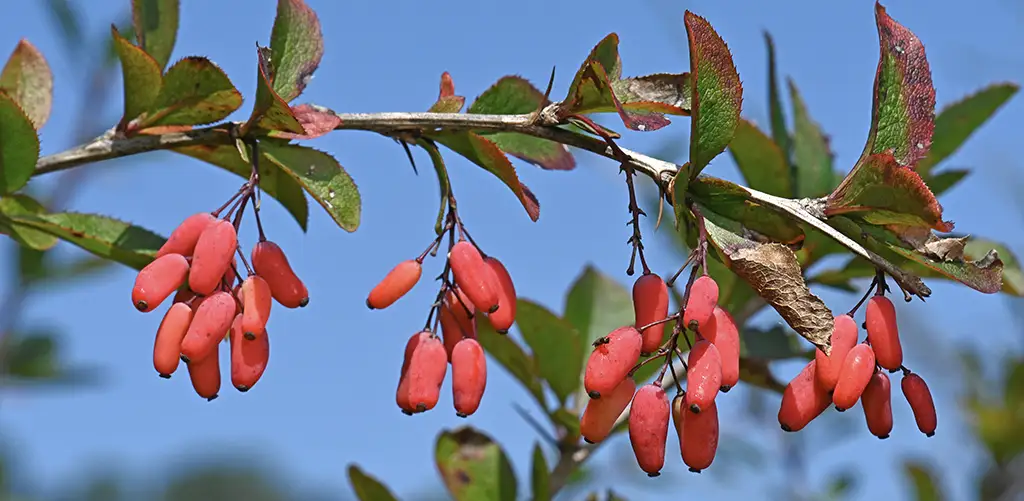
Berberine is an alkaloid that occurs in various plants, including barberry, goldenseal, Oregon grape and Coptis chinensis. The compound is found mainly in roots, stems and bark.
One important area of research is the influence of berberine on the energy and metabolism of cells. AMPK receives a great deal of attention in this context, among other things. This enzyme helps cells respond to the amount of energy available and is involved in the processing of glucose and fats.¹
Which benefits of berberine are being studied?
Most studies in humans focus on metabolic health. Blood sugar, insulin, cholesterol and body weight in particular come up regularly.
Blood sugar and insulin
This is one of the best-studied applications of berberine. A meta-analysis of twenty randomised studies with a total of 1,761 participants found changes in fasting glucose, HbA1c, insulin and insulin resistance, among other measures.²
Larger reviews of research in people with type 2 diabetes show comparable results as well. The measured effects do differ by target group, dose and study duration.
Cholesterol and fat metabolism
Berberine is also widely studied in relation to LDL cholesterol, total cholesterol and triglycerides. A systematic review of twelve clinical studies found decreases in LDL and triglycerides in several of them.³
A more recent meta-analysis into metabolic syndrome likewise found changes in various glucose and fat values.
Body weight
The popularity of berberine on social media has a lot to do with weight management. Researchers look at body weight, BMI, waist circumference and fat metabolism, among other things.
The results are less pronounced than is sometimes suggested online. On average, reviews show small changes, especially with longer use and higher doses. The quality of the studies also varies.⁴
That makes berberine interesting above all because of its broader relationship with glucose, fat and energy metabolism, and not as a simple replacement for weight-loss medication.
Berberine and your gut
The gut plays a striking role where berberine is concerned. Ordinary berberine is absorbed relatively poorly. Gut bacteria can convert part of it into dihydroberberine, a form that passes through the gut wall more easily.
At the same time, researchers are studying how berberine itself influences the gut microbiome and how that interaction relates to metabolism.¹
Berberine or dihydroberberine?
The main difference between the two forms lies in absorption.
Ordinary berberine has a low bioavailability. Dihydroberberine is absorbed more easily and is then largely converted back into berberine. In a small human crossover study, 100 and 200 mg of dihydroberberine led to higher berberine concentrations in the blood than 500 mg of ordinary berberine.⁵
That means the doses of the two forms cannot be compared one to one.
Berberine and PCOS
Berberine also comes up in research into PCOS, insulin sensitivity and hormonal metabolism. That ties in with the broader research into glucose and insulin regulation.
Inositol is also widely studied within this field. The two compounds are chemically very different and work through different routes.
How much berberine is used?
There is no official daily reference intake for berberine. In clinical research, roughly 900 to 1,500 mg a day is often used, usually divided over two or three moments. The amount used depends strongly on the form. With dihydroberberine, considerably lower doses are being studied because of the better absorption.
Berberine is often used around or during meals. This is in line with many clinical studies and may be more comfortable on the stomach for some people.
How long does it take for berberine to work?
That depends on what is being measured, on the dose and on the form used. Most clinical studies into blood sugar and cholesterol run for several weeks to a few months, and the changes they report are measured over that whole period rather than after a few days. Researchers also see differences between people, depending on their starting values, diet and lifestyle.
Berberine is therefore mainly studied as something that is used consistently over a longer period, and not as a compound with an effect you notice straight away.
Are there any side effects?
The most commonly reported side effects of berberine are gastrointestinal complaints, such as:
- nausea
- abdominal pain
- a bloated feeling
- diarrhoea
- constipation
Berberine can also interact with medicines. Use during pregnancy and breastfeeding is not advised, and berberine is not suitable for babies.⁴
Do you use medication or have a medical condition? Then discuss its use with a doctor or pharmacist.
Which medicines are involved?
The interactions mentioned most often concern medicines for blood sugar and blood pressure, blood thinners and cyclosporine, a medicine that suppresses the immune system.⁴ Because berberine itself acts on glucose and fat metabolism, combining it with this kind of medication may change how strongly they work. Whether that is relevant in your situation depends on the medicine and the dose.
Where does berberine occur naturally?
Berberine occurs in plants such as barberry, goldenseal, Oregon grape, tree turmeric and Coptis chinensis. It is found mainly in the roots, rhizomes and bark.
That makes it different from many vitamins or polyphenols: through a normal Western diet you generally do not take in relevant amounts of berberine.
Berberine in brief
Berberine is a plant alkaloid that is studied above all for its relationship with blood sugar, insulin sensitivity, cholesterol, fat metabolism and body weight.
The compound acts on various metabolic processes and at the same time has a relatively low absorption. That explains the growing interest in better-absorbed forms such as dihydroberberine.
The amount of research into berberine is now large. Interesting results have been measured in humans for glucose and fat metabolism in particular, while topics such as weight loss are often more nuanced than popular posts on social media suggest.
References
- Sun A, et al. Molecular mechanisms, targets and clinical potential of berberine in regulating metabolism. Frontiers in Pharmacology, 2024. https://pubmed.ncbi.nlm.nih.gov/38957396
- Zhao JV, et al. Overall and Sex-Specific Effect of Berberine on Glycemic and Insulin-Related Traits: a Systematic Review and Meta-Analysis of Randomized Controlled Trials. The Journal of Nutrition, 2023. https://pubmed.ncbi.nlm.nih.gov/37598753
- Koppen LM, et al. Efficacy of Berberine Alone and in Combination for the Treatment of Hyperlipidemia: A Systematic Review. 2017. https://pubmed.ncbi.nlm.nih.gov/29228784
- National Center for Complementary and Integrative Health. Berberine and Weight Loss: What You Need To Know. https://www.nccih.nih.gov/health/berberine-and-weight-loss-what-you-need-to-know
- Moon JM, et al. Absorption Kinetics of Berberine and Dihydroberberine and Their Impact on Glycemia: A Randomized, Controlled, Crossover Pilot Trial. Nutrients, 2022. https://pubmed.ncbi.nlm.nih.gov/35010998


 English
 Dutch
Dutch German
 French
 Spanish
 Romanian
 Danish
 Italian