
The beginner longevity supplement guide 2026
 Written byRein Ridder
 Reviewed bySamo Borko | Biochemist and Expert Formulator at Purovitalis
Which longevity supplements should you start with? Start with the basics: food, sleep and exercise, and a blood test to see whether you are low in something such as vitamin D. After that, research looks at a range of supplements, from omega-3 and creatine to NAD+ precursors, spermidine and GlyNAC, but for most of them the human evidence is still limited, and none has been shown to make people live longer.
This guide gives a simple overview of some of the most talked-about longevity supplements: what each is studied for, how strong that research is, and what to watch out for.
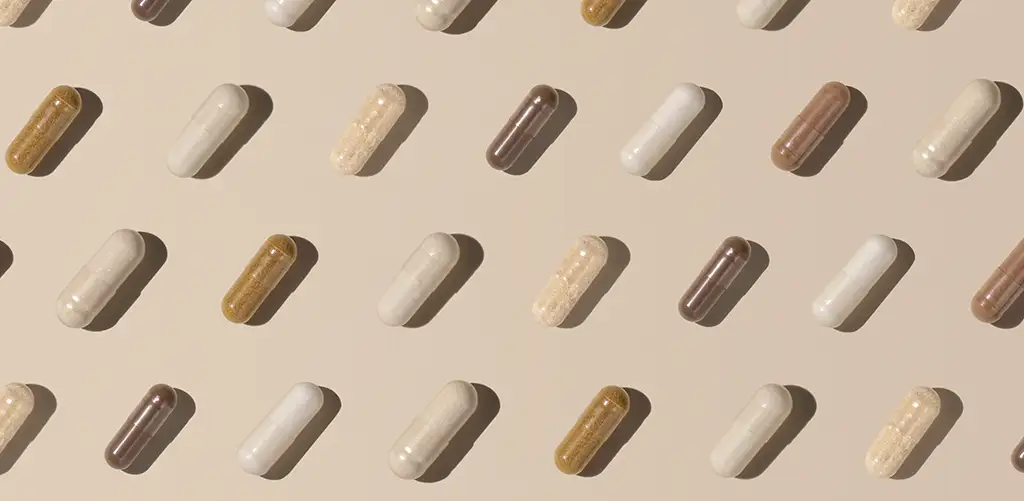
Where to start?
The first rule is simple: don’t take supplements just for the sake of it, and don’t choose something only because it works for someone else. What one person needs may not be what you need.
Supplements are not shortcuts. They come after the basics, and they make most sense where there is a gap, for example in what you eat or in what a blood test shows.
What do you need?
Think about what you want to look at first: sleep, energy during the day, recovery after exercise, or a mix. Knowing that makes the choice clearer.
What our customers tell us
Our own data points the same way. Of the 447 people who completed our supplement quiz between September and November 2026, 39 percent said they would rather start with a single product, 38 percent with a small routine and 23 percent with something targeted. Most were women (73 percent) and over 50 (57 percent), and the areas they most wanted to look at were energy, skin, mental tiredness and sleep.
The questions customers send our customer service before they start are mostly practical: how to combine several products and whether to take them all at once, which side effects to look out for, whether a supplement can be taken with medication such as statins, blood thinners or thyroid medication, and how products are tested. Questions about medication are for your doctor or pharmacist.
How do you start a longevity supplement routine?
- Check the basics first: regular sleep, a varied diet with enough protein, and exercise.
- Ask your doctor for a blood test if you think you may be low in something, for example vitamin D.
- Add one supplement at a time, so you can tell what you take and how it agrees with you.
- Check the amount per serving against what was used in human studies.
- If you take medication, ask your doctor or pharmacist before you start.
What do longevity supplements actually do?
“Longevity supplements” is not an official category. It is a name for supplements that are studied in relation to processes of ageing. None of them has been shown to make people live longer; most of the research is in cells and animals, with smaller studies in people. The table groups them by the area researchers look at.
| Research area | What is studied | Examples |
|---|---|---|
| Cell energy and NAD+ | How cells make energy and repair DNA, and why NAD+ levels are lower in older age | NMN, NR |
| Mitochondria and oxidative stress | How the energy-producing parts of cells deal with oxidative stress | CoQ10, GlyNAC, L-ergothioneine |
| Autophagy and cell renewal | How cells break down and recycle their own parts | Spermidine, resveratrol, quercetin |
| Inflammation and metabolic health | Long-term, low-grade inflammation and how the body handles sugar and fat | Omega-3, curcumin, berberine |
Cell energy and NAD⁺
NAD+ is a molecule that cells need for energy production and DNA repair. Levels are lower in older age in several tissues. NMN and NR are studied as building blocks for NAD+; small human studies measured higher NAD+ levels, but effects on health have not been established.
Mitochondria and oxidative stress
Mitochondria are the parts of cells that produce energy. CoQ10, GlyNAC and L-ergothioneine are studied in relation to mitochondria and oxidative stress, mostly in small or laboratory studies.
Autophagy and cell renewal
Autophagy is the process cells use to break down and recycle their own parts. Spermidine, resveratrol and quercetin are studied in relation to autophagy, so far mainly in cell and animal research.
Inflammation and metabolic health
Low-grade inflammation that lasts a long time is one of the processes studied in ageing research. Omega-3, curcumin and berberine are studied in relation to inflammation and metabolism; results in people differ by dose, product and study.
The beginner’s longevity supplement list
The list below brings together 12 supplements that are often discussed in the longevity space. For each one it says what it is studied for and how strong the research is. It is a menu, not a stack to take all at once.
1. Vitamin D3 + K2 — vitamin D status and calcium research
The skin makes vitamin D under sunlight, so levels often drop in winter. In a large European analysis, about 13 percent of people had levels below 30 nmol/L and about 40 percent below 50 nmol/L, two thresholds used to define low vitamin D status; a blood test shows where you stand.
Vitamin K is studied in relation to calcium build-up in blood vessels, so far mainly in laboratory and observational research; larger trials are still needed.
Read more about vitamins in longevity research
View Liposomal Vitamin D3 & K2
2. Omega-3 — inflammation research
EPA and DHA, the omega-3 fatty acids in fatty fish, become part of cell membranes and are studied in relation to inflammatory processes. Trials have measured inflammation markers in healthy people and in patients, with results that differ between studies.
3. Magnesium — sleep research
Magnesium is a mineral found in nuts, seeds, whole grains and green vegetables. A 2021 review of three small trials (151 older adults with insomnia) rated the evidence on magnesium and sleep as low to very low quality.
4. Creatine — muscle and brain research
Creatine is one of the most studied supplements. It is studied in older adults together with strength training, in relation to muscle. A 2018 review of six trials found signs of changes in short-term memory, but a 2026 review found only two intervention studies in people over 55.
5. NMN or NR — NAD+ research
NMN and NR are building blocks the body can use to make NAD+. In randomised trials they raised NAD+ levels in the blood, but a meta-analysis found no consistent changes in muscle mass and function (2025), and NMN showed none in blood sugar and blood lipids (2024).
Read more about NAD+ precursors
6. CoQ10 — mitochondria research
The body makes CoQ10 itself and uses it in energy production in mitochondria. Statins lower CoQ10 levels in the blood, and trials have tested CoQ10 in people with muscle complaints while taking statins; most other human trials are in people with specific conditions.
7. GlyNAC — glutathione research
GlyNAC combines glycine and N-acetylcysteine, two building blocks of glutathione. In a 16-week trial with 24 older adults, changes were measured in glutathione and markers of oxidative stress. The human trials so far are small and short; in a 2022 trial by another research group, with 114 older adults, glutathione did not change after two weeks.
8. Spermidine — autophagy research
Spermidine is studied for its role in autophagy, mainly in cell and animal research. In a 12-month trial with 100 older adults with self-reported memory complaints, spermidine did not change memory compared with placebo.
9. Resveratrol / pterostilbene — sirtuin research
Resveratrol is a polyphenol from grapes and berries that is studied in relation to sirtuins, enzymes involved in how cells respond to stress, mostly in laboratory research. Taken by mouth, most resveratrol is absorbed but quickly converted, so only traces reach the blood unchanged. In rats, its relative pterostilbene was better absorbed; human comparisons are lacking.
10. Berberine / dihydroberberine — metabolism research
Berberine is widely studied in relation to blood sugar and blood lipids, mostly in trials in people with type 2 diabetes or high blood lipids. In a small crossover pilot study with five young men, 100 mg of dihydroberberine gave higher blood levels of berberine than 500 mg of ordinary berberine; blood sugar and insulin did not differ in this short study.
11. Ergothioneine — research on a dietary amino acid
L-ergothioneine comes from food, mainly mushrooms, and the body takes it up with its own transporter. In 2018, the biochemist Bruce Ames proposed it as one of several “longevity vitamins”; that is a proposal, not an official status, and human trials are few and small.
Read more about L-ergothioneine
12. Curcumin — inflammation research
Curcumin is the yellow compound in turmeric. It is widely studied in relation to inflammatory processes, but plain curcumin is poorly absorbed, which is why many products combine it with piperine or use special formulations.
Find what fits you
Answer a few short questions and discover which supplements match your goals and daily routine.
Find your supplementSide effects and points of attention
More is not better. Taking many supplements at once makes it harder to see what agrees with you, and some of them can interact with medicines. Berberine, for example, raised blood levels of the medicine ciclosporin in part of a small study in healthy men; the authors suggested it may slow how the body breaks the medicine down.
Check the amount per serving, and do not combine products that contain the same ingredient without counting the total. If you are pregnant or breastfeeding, take medication or have a medical condition, ask your doctor or pharmacist before you start a supplement.
Supplements: just one piece of the puzzle
Supplements alone won’t make you live longer. They come after sleep, food, exercise and a steady daily rhythm, and for most of the ingredients in this list the research in people is still limited.
Build a routine in layers: start with the basics, check for gaps, add one thing at a time where it fits a need, and give it time. Small changes you keep up make more difference than many at once.
Frequently asked questions
Check five things: the exact amount of each ingredient per serving, whether that amount matches what was used in human studies, where the product is made, whether a certificate of analysis from an independent laboratory is available, and whether the label is clear about every ingredient. A reliable brand shows all of this on its product pages.
Start with a real need: vitamin D if a blood test shows low levels, omega-3 if you rarely eat fatty fish; creatine is mostly studied together with strength training. Ingredients such as NMN, spermidine and GlyNAC have smaller human studies, and some of them found no clear effect. Be sceptical of anything that promises to reverse ageing or quick results.
No supplement has been shown to make people live longer. Begin with the basics: food, sleep, exercise and, where a test shows a shortfall, nutrients such as vitamin D. Researchers also study NAD+ precursors such as NMN, and GlyNAC, spermidine and resveratrol, in relation to ageing. The list above is a menu, not a stack to take all at once.
No single capsule covers everything, and no supplement replaces a varied diet, sleep or exercise. A multivitamin covers basic micronutrients. For ingredients from longevity research, combination packs put several into one routine. They replace buying those ingredients separately, not the basics.
There is no single best one. Start with the basics and a blood test for vitamin D, then add one supplement at a time if it fits a need you have. Among the ingredients with the most human research in this list are vitamin D, omega-3 and creatine.
No supplement has been shown to make people live longer, so a ranking of “best” is not possible. The list above shows 12 supplements that are often discussed, what each is studied for and how strong that research is. Read the article on the most studied longevity supplements for the evidence per ingredient.
References
- Cashman KD, et al. (2016). Vitamin D deficiency in Europe: pandemic? American Journal of Clinical Nutrition, 103(4), 1033-1044. https://pubmed.ncbi.nlm.nih.gov/26864360/
- Shioi A, et al. (2020). The inhibitory roles of vitamin K in progression of vascular calcification. Nutrients, 12(2), 583. https://pubmed.ncbi.nlm.nih.gov/32102248/
- Calder PC. (2012). The role of marine omega-3 (n-3) fatty acids in inflammatory processes, atherosclerosis and plaque stability. Molecular Nutrition & Food Research, 56(7), 1073-1080. https://pubmed.ncbi.nlm.nih.gov/22760980/
- Rangel-Huerta OD, et al. (2012). Omega-3 long-chain polyunsaturated fatty acids supplementation on inflammatory biomakers: a systematic review of randomised clinical trials. British Journal of Nutrition, 107(Suppl 2), S159-S170. https://pubmed.ncbi.nlm.nih.gov/22591890/
- Mah J, Pitre T. (2021). Oral magnesium supplementation for insomnia in older adults: a systematic review & meta-analysis. BMC Complementary Medicine and Therapies, 21(1), 125. https://pubmed.ncbi.nlm.nih.gov/33865376/
- Avgerinos KI, et al. (2018). Effects of creatine supplementation on cognitive function of healthy individuals: a systematic review of randomized controlled trials. Experimental Gerontology, 108, 166-173. https://pubmed.ncbi.nlm.nih.gov/29704637/
- Marshall S, et al. (2026). Creatine and cognition in aging: a systematic review of evidence in older adults. Nutrition Reviews, 84(2), 333-344. https://pubmed.ncbi.nlm.nih.gov/40971619/
- Covarrubias AJ, et al. (2021). NAD+ metabolism and its roles in cellular processes during ageing. Nature Reviews Molecular Cell Biology, 22(2), 119-141. https://pubmed.ncbi.nlm.nih.gov/33353981/
- Martens CR, et al. (2018). Chronic nicotinamide riboside supplementation is well-tolerated and elevates NAD+ in healthy middle-aged and older adults. Nature Communications, 9(1), 1286. https://pubmed.ncbi.nlm.nih.gov/29599478/
- Yi L, et al. (2023). The efficacy and safety of β-nicotinamide mononucleotide (NMN) supplementation in healthy middle-aged adults: a randomized, multicenter, double-blind, placebo-controlled, parallel-group, dose-dependent clinical trial. GeroScience, 45(1), 29-43. https://pubmed.ncbi.nlm.nih.gov/36482258/
- Prokopidis K, et al. (2025). The effect of nicotinamide mononucleotide and riboside on skeletal muscle mass and function: a systematic review and meta-analysis. Journal of Cachexia, Sarcopenia and Muscle, 16(3), e13799. https://pubmed.ncbi.nlm.nih.gov/40275690/
- Chen F, et al. (2024). Effects of nicotinamide mononucleotide on glucose and lipid metabolism in adults: a systematic review and meta-analysis of randomised controlled trials. Current Diabetes Reports, 25(1), 4. https://pubmed.ncbi.nlm.nih.gov/39531138/
- Banach M, et al. (2015). Statin therapy and plasma coenzyme Q10 concentrations: a systematic review and meta-analysis of placebo-controlled trials. Pharmacological Research, 99, 329-336. https://pubmed.ncbi.nlm.nih.gov/26192349/
- Qu H, et al. (2018). Effects of coenzyme Q10 on statin-induced myopathy: an updated meta-analysis of randomized controlled trials. Journal of the American Heart Association, 7(19), e009835. https://pubmed.ncbi.nlm.nih.gov/30371340/
- Kumar P, et al. (2023). Supplementing glycine and N-acetylcysteine (GlyNAC) in older adults improves glutathione deficiency, oxidative stress, mitochondrial dysfunction, inflammation, physical function, and aging hallmarks: a randomized clinical trial. Journals of Gerontology Series A, 78(1), 75-89. https://pubmed.ncbi.nlm.nih.gov/35975308/
- Lizzo G, et al. (2022). A randomized controlled clinical trial in healthy older adults to determine efficacy of glycine and N-acetylcysteine supplementation on glutathione redox status and oxidative damage. Frontiers in Aging, 3, 852569. https://pubmed.ncbi.nlm.nih.gov/35821844/
- Schwarz C, et al. (2022). Effects of spermidine supplementation on cognition and biomarkers in older adults with subjective cognitive decline: a randomized clinical trial. JAMA Network Open, 5(5), e2213875. https://pubmed.ncbi.nlm.nih.gov/35616942/
- Kapetanovic IM, et al. (2011). Pharmacokinetics, oral bioavailability, and metabolic profile of resveratrol and its dimethylether analog, pterostilbene, in rats. Cancer Chemotherapy and Pharmacology, 68(3), 593-601. https://pubmed.ncbi.nlm.nih.gov/21116625/
- Walle T, et al. (2004). High absorption but very low bioavailability of oral resveratrol in humans. Drug Metabolism and Disposition, 32(12), 1377-1382. https://pubmed.ncbi.nlm.nih.gov/15333514/
- Moon JM, et al. (2021). Absorption kinetics of berberine and dihydroberberine and their impact on glycemia: a randomized, controlled, crossover pilot trial. Nutrients, 14(1), 124. https://pubmed.ncbi.nlm.nih.gov/35010998/
- Li Z, et al. (2023). Berberine and health outcomes: an umbrella review. Phytotherapy Research, 37(5), 2051-2066. https://pubmed.ncbi.nlm.nih.gov/36999891/
- Xin HW, et al. (2006). The effects of berberine on the pharmacokinetics of cyclosporin A in healthy volunteers. Methods and Findings in Experimental and Clinical Pharmacology, 28(1), 25-29. https://pubmed.ncbi.nlm.nih.gov/16541194/
- Ames BN. (2018). Prolonging healthy aging: longevity vitamins and proteins. Proceedings of the National Academy of Sciences of the USA, 115(43), 10836-10844. https://pubmed.ncbi.nlm.nih.gov/30322941/
- Anand P, et al. (2007). Bioavailability of curcumin: problems and promises. Molecular Pharmaceutics, 4(6), 807-818. https://pubmed.ncbi.nlm.nih.gov/17999464/
Add Purovitalis as a preferred source on Google Google then shows more of our articles in your search results.


 English
 Dutch
 German
 French
 Spanish
 Romanian
 Danish
 Italian