
 Skip to content



You may already take vitamins and minerals and understand how much of a difference they can make to your health. But once in a while, social media, especially TikTok, is hit with a new supplement obsession, which may raise your eyebrows. Recently, this has been the case with berberine – a bitter-tasting chemical found in plants that has been dubbed ‘nature’s Ozempic’.
But is the sought-after herbal alternative really as effective as they say? What does berberine do, and is it safe to use? In this guide, we cover all the questions you might have about the viral supplement!
table of contents
What is berberine?
If you’re clueless about what berberine is, you’re not the only one! Although the botanical compound has been used in traditional Ayurvedic and Chinese medicine for centuries, it has only recently gained popularity among a wider crowd.
In simple terms, berberine is an isoquinoline alkaloid – a phytochemical found in several plants, including Berberis aristata, other Berberis species, and the Chinese herb Coptis chinensis. Since berberine targets a protein involved in insulin resistance, it is mostly used for type 2 diabetes, high cholesterol, polycystic ovarian syndrome (PCOS), and obesity.
Gynostemma pentaphyllum is sometimes mentioned in the same conversation, as it is likewise associated with metabolic health, but it contains different active compounds compared with berberine.
What does berberine do?
The effects of berberine have been tested in hundreds of different studies. What makes berberine useful for the human body is the fact that it activates a specific enzyme inside cells (AMP-activated protein kinase), which has a huge role in regulating metabolism and energy levels.
Likewise, the botanical compound is involved in several different processes inside cells, which may even affect which genes are turned on or off. This, consequently, could be beneficial for a number of different chronic health conditions.
What studies say about berberine
Research on berberine has increased a lot in recent years, especially when it comes to metabolic health. Several clinical studies suggest that berberine may help improve blood sugar levels, cholesterol, and insulin sensitivity, although results can vary depending on factors such as study design and berberine dosage. In one early study on people with type 2 diabetes, berberine was shown to significantly lower blood sugar and HbA1c, with effects similar to commonly used medication.
More recent reviews support these findings. They show that berberine may help reduce triglycerides and LDL cholesterol, while also improving how the body responds to insulin. This has made it a popular option for people looking to support their metabolic health, especially when taken consistently and at an appropriate berberine dosage.
Researchers have also found that berberine works in multiple ways in the body. It can affect how cells use energy, influence inflammation, and even interact with the gut microbiome. These combined effects may help explain why berberine is being studied for a range of conditions, including type 2 diabetes, heart health, and weight management, where berberine dosage may play an important role in the outcomes observed.
What to keep in mind
That said, the research is not completely straightforward. Many of the studies differ in design, dosage, and duration, which can make results harder to compare. While the overall findings are promising, more large and well-controlled studies are still needed to fully understand its long-term effects.
Benefits of berberine
Although the buzz around berberine mostly relates to its ability to aid people with type 2 diabetes, berberine offers other benefits too. Still, it’s important to note that while plenty of research has looked at berberine’s effects, there’s never been a large-scale, randomised, controlled study conducted. That’s why to fully understand berberine’s health benefits, it’s critical to have more research.
Nevertheless, let’s look at the benefits of berberine that we currently know of.
Helps with lowering blood sugar for people with diabetes
One of the main benefits of berberine is its ability to reduce blood sugar in people with diabetes. In one 2020 study, 80 patients with type 2 diabetes were given 480 milligrams of berberine or traditional treatment with 1,000 milligrams of metformin. It was concluded that the supplement was as effective as metformin and really did reduce blood sugar.
Lowers blood pressure and helps with other cardiovascular problems
According to research, berberine may also be helpful for several cardiovascular issues, including hypertension, arrhythmia, and heart failure. That’s because the botanical compound can positively impact inflammation and oxidative stress, plus it’s proven to be valuable for regulating electrical signals in the human body. These findings may especially benefit people who can’t use statins (drugs that reduce cholesterol).
Promotes weight loss
It’s impossible to talk about the benefits of berberine and what it does without mentioning weight loss. It’s, after all, what it’s most famous for! So, what does science say about it?
In one study, people with obesity were taking 500 milligrams of the supplement three times a day. As a result, after the 12-week study, the participants had lost around 5 pounds, on average. Moreover, they had also lost 3.6% of their body fat.
Other benefits
In addition to the potential health benefits we’ve listed above, berberine supplements may be helpful for other conditions as well, such as:
- PCOS symptoms (according to a review published in 2020, berberine could be beneficial for people suffering from PCOS since it is often linked with not utilising insulin well)
- Dementia and other cognitive issues (in a 2020 systemic review, it was concluded that berberine could prevent brain damage and improve cognitive function)
- Infections (it seems that berberine can reduce the growth of harmful microorganisms, including some viruses)
Also, check what the main differences are between berberine and inositol.
Is berberine safe?
Overall, berberine is thought to be safe for most healthy adults if taken in doses of up to 1.5 grams per day. However, there are some instances and potential berberine drug interactions when taking the supplement could lead to problems. For example:
- Berberine shouldn’t be used during pregnancy and while breastfeeding.
- In newborn infants, berberine can cause the yellowing of the skin and brain damage.
- The supplement may interact with cyclosporine, diabetes medications, blood pressure medications, Robitussin DM, and blood thinners.
Does berberine cause diarrhea?
Since the supplement is derived from a plant, experiencing side effects from berberine is relatively uncommon. However, there have been some reports of mild gastrointestinal side effects, like diarrhoea, gas, and constipation.
To avoid potential side effects, make sure to follow dosage recommendations and not take berberine for longer than six months.
As with many other supplements, berberine comes with pros and cons. The encouraging part is that in many clinical studies, the reported side effects—such as nausea, diarrhea, constipation, and abdominal discomfort—tend to be mild and mainly limited to the digestive system.
Berberine supplements
Currently, berberine supplements are available as tablets, capsules, or tinctures. This means you can choose the option that best fits your everyday routine.
Berberine is known for its strong, bitter taste. Some might even say berberine tastes awful, though this comes down to personal preference. Its bitterness comes from its natural alkaloid structure, which gives it a sharp and intense flavour.
If you’re sensitive to flavour, capsules may be a better choice than tinctures. If the bitter taste does not bother you, berberine can still be taken as a digestive tonic five to 30 minutes before eating.
According to a 2018 study, berberine capsules can differ significantly in their content. A higher price does not always reflect better quality.
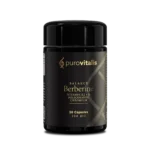
Purovitalis Berberine Balance
For those looking for a more advanced formulation, the composition of a berberine supplement can make a meaningful difference. Some products now use dihydroberberine exclusively, a more bioavailable form that may be absorbed more efficiently compared to standard berberine.
Berberine Balance by Purovitalis is based on dihydroberberine and combines it with carefully selected ingredients such as vitamin K2, vitamin E, and policosanol. This highlights an important point: beyond dosage alone, the overall formulation and quality of a supplement can vary significantly, which is worth considering when choosing a berberine product.
Read more about dihydroberberine here: What is Dihydroberberine?
Berberine dosage
Wondering what the best berberine dosage is? It is generally considered safe to take no more than two grams per day, and many supplements provide around 500 milligrams per capsule, which is why some people take two capsules daily.
Still, a common question is: is berberine safe long term? Current research suggests that berberine is generally well tolerated in the short to medium term, but more research is still needed on long-term use. Reported side effects are most often digestive and may include nausea, abdominal pain, bloating, constipation, or diarrhea. Berberine may interact with certain medicines, including cyclosporine, so this should be taken into account before using it regularly.
Before starting berberine supplementation, it is a good idea to speak with your healthcare provider, especially if you plan to take it regularly or for a longer period of time.
When to take berberine? Can I take it before bed?
Although there are no strict guidelines for taking berberine, we advise taking it with meals. This will enhance the supplement’s absorption and minimise the risks of experiencing gastrointestinal side effects!
Remember that berberine works best when taken long-term, and if you’re new to it, it’s wise to start with a lower dose.
Interestingly, one study came to the conclusion that taking the supplement at nighttime may improve your memory, help with managing weight, and improve your sleep.
How long does it take for berberine to work?
The answer to this question depends on several factors, including the dosage taken, your health status, and your goals. With some conditions, like blood sugar regulation and digestive issues, positive results are noticed quite quickly. However, if you’re hoping that berberine will help with cardiovascular health or high cholesterol, you should be prepared for it to take weeks or even months to see any changes.
Berberine rich foods
If you prefer to get your daily dose of berberine through food, it can be a bit of a challenge, but not impossible. The plant compound is found in the stem, bark, and roots of herbs like Oregon grape, tree turmeric, goldenseal, as well as Mexican prickly poppy. However, keep in mind that the Mexican prickly poppy can be poisonous if consumed in large amounts.
Conclusion
Like TikTok trends, new supplements appear all the time, often surrounded by bold claims and quick hype. Berberine, however, stands out as a supplement that is supported by a growing body of research, particularly when it comes to metabolic health, blood sugar balance, and cholesterol levels.
While it is not a quick fix, the findings so far are encouraging. For many people, berberine may offer a helpful addition to a healthy lifestyle, especially when used consistently and at an appropriate berberine dosage. Its effects appear to go beyond a single benefit, working through multiple pathways in the body to support overall metabolic balance.
That said, it is still important to approach it with realistic expectations. Supplements work best as part of a broader routine that includes a balanced diet, regular movement, and good sleep habits.
If you are considering adding berberine to your routine, taking the time to understand how it works and how to use it correctly can make a real difference. And as always, speaking with a healthcare professional can help you decide whether it is the right fit for your individual needs.
Berberine FAQ
Where to buy berberine?
Nowadays, berberine supplements are available in the majority of pharmacies and health food stores. You can also purchase berberine directly from supplement manufacturers.
However, when choosing the supplement, look for third-party testing for quality and purity to ensure you’re getting a safe and effective product.
What is berberine made of?
Berberine is a bioactive compound extracted from several plants, including Berberis species (like barberry, goldenseal, and Oregon grape), as well as other plants such as tree turmeric and Coptis chinensis. Chemically, it is classified as an isoquinoline alkaloid, which gives it its characteristic bright yellow colour.
Who should not take berberine?
While berberine is generally safe for most people, certain groups should avoid it or use it with caution, including pregnant and breastfeeding women, children, people with low blood pressure, individuals with liver or kidney diseases, as well as people taking certain medications.

Berberine Balance protects heart optimizes metabolism Blood Sugar Control
While regular Berberine gets the job done, Dihydroberberine does it better, faster, and longer. Try it out!
Share: