What is NMN? The Complete Guide to Nicotinamide Mononucleotide
 Written byKarina Ahrenholt
 Reviewed bySamo Borko | Biochemist and Expert Formulator at Purovitalis
NMN has become one of the best-known substances within longevity and healthy ageing in a short space of time. That has mainly to do with NAD+: a molecule our cells need for their energy metabolism and that is involved in various processes in the body.
NAD+ is involved in the energy metabolism of cells, in mitochondria and in various processes around cell maintenance. Research shows that NAD+ metabolism changes as we get older. The question is therefore: can NMN, as a building block for NAD+, have an influence on that?

The relationship between NMN and NAD+
NAD+ occurs in almost all our cells and is needed for many enzymatic reactions. It helps convert nutrients into energy and is used by enzymes such as sirtuins and PARPs.
Your body can produce and recycle NAD+ through various pathways. NMN sits directly in one of those pathways: it is converted into NAD+ by the body.
Studies in humans now clearly show that oral intake of NMN can raise NAD+ levels in the blood. In a randomised study with 80 healthy middle-aged adults, NAD+ levels rose after 30 and 60 days with a daily intake of 300, 600 or 900 mg NMN.¹
What makes NMN interesting within longevity?
Research into NMN now goes further than only measuring NAD+. Among other things, scientists are looking at metabolism, muscle function, physical performance and sleep.
In the same study with 80 adults, alongside a rise in NAD+, a greater distance covered was also measured during a six-minute walk test.¹
Read more about NMN and exercise endurance
Another clinical study focused on women with overweight or obesity and prediabetes. After ten weeks of NMN, a higher insulin sensitivity of the skeletal muscle was measured.²
Read more about NMN and metabolism
In older adults, a 2024 study likewise measured a rise in NAD+ after twelve weeks. In addition, walking speed was better maintained and certain sleep measurements improved.³
These studies explain why NMN receives so much attention within research into healthy ageing.
Where does NMN come from?
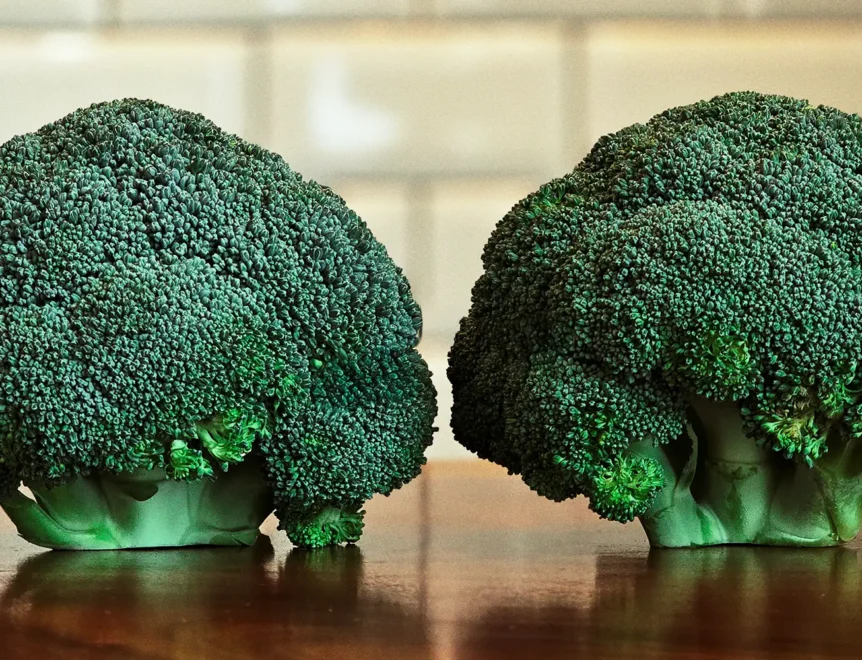
Your body makes NMN itself from compounds related to vitamin B3. NMN also occurs naturally in small amounts in food, including:
- broccoli
- cucumber
- avocado
- edamame
- cabbage
Through food you take in relatively small amounts. For the most part your body therefore depends on its own production and recycling within NAD+ metabolism.
Which forms of NMN are there?
NMN is available in various forms. The active substance is basically the same, but formulation and use differ.
- Powder is simple and flexible to dose.
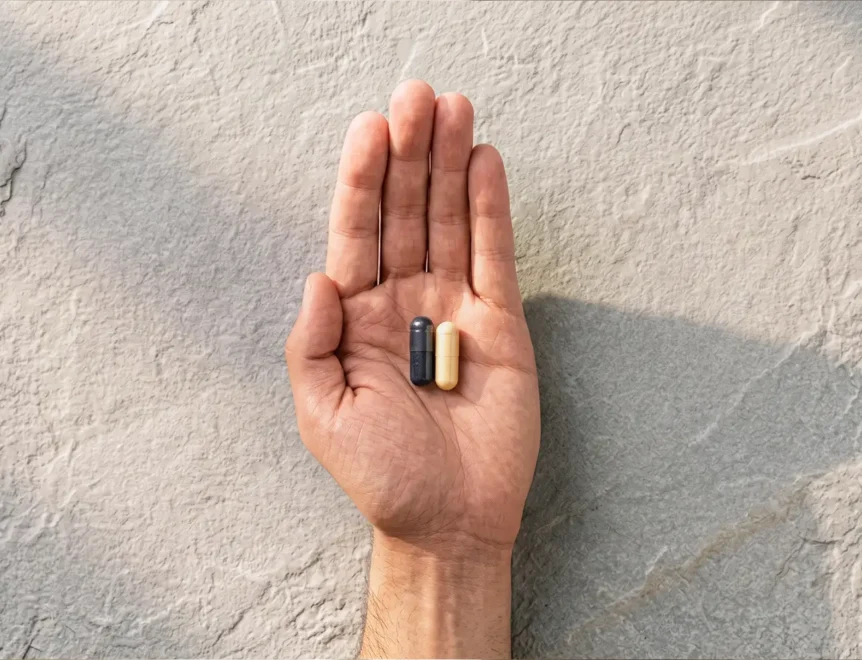
- Capsules offer a fixed amount and are practical for daily use.
- Liposomal formulations process NMN together with fat-like structures and are developed with attention to stability and bioavailability.
Whichever form you choose, with NMN it is above all purity, stability and the amount actually present that matter.
Why quality and purity matter
Not every NMN supplement contains what the label promises. In a peer-reviewed study from 2024, eighteen commercial NMN supplements were analysed. The measured amounts differed sharply from the stated amounts, and in three products no NMN could be detected at all. In most of the products examined, the amount was below the label claim.⁴
That is precisely why a traceable origin and batch-by-batch testing matter. At Purovitalis, NMN is produced in Europe under strict quality controls. Every batch is checked for purity, stability and consistency. With the formulations, attention also goes to stability and bioavailability.
NMN, NR and NAM: what is the difference?
NMN is not the only building block within NAD+ metabolism.
NMN (nicotinamide mononucleotide)
A direct precursor within the production of NAD+.
NR (nicotinamide riboside)
Is converted into NMN in the NAD+ pathway and then processed further.
NAM (nicotinamide)
A simple form of vitamin B3 that is likewise part of the natural NAD+ recycling.
A direct human comparison from 2026 shows that both NMN and NR raised circulating NAD+ levels after fourteen days, while this was not seen with NAM.⁵
Safety and points of attention
In the available human studies, over periods of a few weeks to months, NMN was generally well tolerated. A systematic review of clinical studies found no major safety problems at the dosages studied, but data on long-term use are more limited.
Read more about NMN side effects
Do you use medication, are you pregnant, are you breastfeeding or do you have a medical condition? Then discuss supplement use with a doctor or pharmacist.
Dosage and when to take NMN
Human studies mostly use daily amounts between 250 and 900 mg NMN, over periods of a few weeks to a few months. There is no established optimal dose; what suits you depends on your goals and on the form you use. Many people start with a lower amount and build up gradually.
As for timing, NMN is usually taken in the morning, with or after breakfast. That fits with the role of NAD+ in energy metabolism and with the daily rhythm of the body, although research into the best moment of intake is still limited.
NMN in brief
NMN is a naturally occurring building block for NAD+, a molecule that takes a central place in energy metabolism and various cellular processes.
Studies in humans show that NMN can raise NAD+ levels in the blood. Results are also seen around physical performance, muscle metabolism and sleep. For anyone who looks further into NMN, not only these areas of research are relevant, but also origin, purity, stability and verifiable quality.
References
- Yi L, et al. The efficacy and safety of β-nicotinamide mononucleotide (NMN) supplementation in healthy middle-aged adults: a randomized, multicenter, double-blind, placebo-controlled, parallel-group, dose-dependent clinical trial. GeroScience, 2023. https://pubmed.ncbi.nlm.nih.gov/36482258
- Yoshino M, et al. Nicotinamide mononucleotide increases muscle insulin sensitivity in prediabetic women. Science, 2021. https://pubmed.ncbi.nlm.nih.gov/33888596
- Morifuji M, et al. Ingestion of β-nicotinamide mononucleotide increased blood NAD levels, maintained walking speed, and improved sleep quality in older adults in a double-blind randomized, placebo-controlled study. GeroScience, 2024. https://pubmed.ncbi.nlm.nih.gov/38789831
- Sandalova E, et al. Testing the amount of nicotinamide mononucleotide and urolithin A as compared to the label claim. GeroScience, 2024. https://link.springer.com/article/10.1007/s11357-024-01257-2
- Christen S, et al. The differential impact of three different NAD+ boosters on circulatory NAD and microbial metabolism in humans. Nature Metabolism, 2026. https://pubmed.ncbi.nlm.nih.gov/41540253

 English
 Dutch
Dutch German
 French
 Spanish
 Romanian
 Danish
 Italian