




In the fast-evolving world of health optimization and anti-aging, peptides have quickly taken center stage. From fitness forums to biohacking podcasts, everyone seems to be talking about these tiny cellular signals as the ultimate fountain of youth. Proponents claim they can rebuild collagen, melt body fat, accelerate muscle repair, and even reset your biological clock. But while the science behind cellular signaling is fascinating, the reality of experimental peptide use isn’t quite so simple. Are peptides really worth the hype and the potential health risks, or are there cleaner, safer ways to achieve lasting vitality?
In this blog, we take a closer look at what peptides actually do, the major risks involved, and the proven alternatives for longevity.
table of contents
What are peptides? The research and history
To understand peptides, it helps to look at how your body communicates at a cellular level. Peptides are naturally occurring short chains of amino acids—typically containing between 2 and 50 amino acids linked together by peptide bonds¹. Think of amino acids as individual building blocks: when a few link together, they form a peptide; when dozens or hundreds link and fold into complex shapes, they become proteins.
Scientific peptides research began over a century ago with the groundbreaking discovery of insulin in 1922², which remains one of the most vital peptide-based medical therapies in human history. Since then, researchers have identified thousands of distinct peptides operating within human biology.
Are peptides hormones?
Not all peptides are hormones, but many important hormones are peptides. For instance, insulin, oxytocin, and growth hormone-releasing signals are peptide hormones. They act as precise chemical messengers, traveling through the bloodstream to bind with specific cell receptors and instruct organs on how to function.
While your body produces hundreds of peptides naturally, modern biotechnology has enabled synthetic production. In wellness circles, these synthesized compounds are often used to target specific health goals. However, not all peptide products are created equal. Clean, dietary-grade options like bovine collagen peptides work through digestive absorption to supply essential building blocks for skin, joints, and gut lining without altering your body’s delicate endocrine system³.
Peptide benefits
People turn to peptides for a wide range of health, fitness, and cosmetic goals. Depending on their structure, specific peptides types can influence everything from tissue repair and metabolic rate to hormone output and skin density.
In wellness communities, you will often hear about peptides benefits spanning several core areas:
- Peptides for sleep and recovery by supporting deep restorative cycles.
- Peptides growth hormone secretagogues designed to encourage natural pituitary release.
- Peptides hair growth and peptides in skincare aimed at stimulating follicle activity and collagen structure.
- Peptides muscle growth and peptides recovery used by athletes seeking faster healing after strenuous training.
- Peptides that increase testosterone or balance peptides hormones in both men and peptides women.
Note on safety
While the underlying biology of cellular signaling is promising, at Purovitalis we do not sell, test, or endorse experimental peptide injections. Unregulated biological experimentation carries inherent health risks. Instead, we focus on clean, thoroughly researched, and safety-verified longevity formulations that work in harmony with your body’s natural pathways.
Below is an overview of popular individual peptides currently discussed in the longevity space:
Bovine Collagen Peptides
Unlike synthetic hormone secretagogues, bovine collagen peptides are bioavailable, natural peptide chains derived from hydrolyzed collagen. Double-blind placebo studies confirm that oral collagen peptides significantly improve skin elasticity, hydration, and dermal collagen density without disturbing hormonal equilibrium³.
GHK-Cu
GHK-Cu is a naturally occurring copper peptide found in human plasma. Popularized in skincare and anti-aging research, peptides ghk have been shown to decline by roughly 60% as we age⁴. Landmark studies demonstrate its ability to stimulate collagen synthesis, reduce inflammation, and upregulate tissue-repair genes⁴.
Epitalon
Epitalon is a synthetic tetrapeptide modeled after a pineal gland secretion. Pioneered by chronobiologists and supported by recent cellular research, studies show Epitalon activates the enzyme telomerase, helping preserve telomere length and regulate pineal melatonin synthesis associated with sleep and circadian rhythm⁵.
BPC-157
Derived from a protective protein found in human gastric juice, peptides bpc 157 are widely studied for tissue regeneration. Extensive animal models show BPC-157 dramatically accelerates the healing of tendons, muscles, ligaments, and damaged gut linings by promoting angiogenesis (new blood vessel formation)⁶.
MOTS-c
MOTS-c is a mitochondria-derived peptide that plays a central role in metabolic homeostasis. Research published in Cell Metabolism revealed that MOTS-c targets skeletal muscle to improve insulin sensitivity, regulate glucose metabolism, and boost physical performance during exercise⁷.
Sermorelin / Ipamorelin
Both peptides sermorelin and peptides ipamorelin act as growth hormone secretagogues. Clinical trials indicate that Sermorelin selectively stimulates the pituitary gland to release natural growth hormone, promoting muscle recovery, lean mass retention, and improved deep-wave sleep cycles,⁸.
HCG
Human Chorionic Gonadotropin (HCG) is a peptide hormone produced during pregnancy. Clinical endocrinology uses HCG off-label to mimic luteinizing hormone (LH), thereby stimulating Leydig cells in the testes to maintain natural testosterone production⁹.
PT-141 (Bremelanotide)
Known commercially as peptides 141, PT-141 is a synthetic peptide originally developed for sunless tanning that was found to act on the central nervous system. FDA-approved trials demonstrate that it binds to melanocortin receptors in the brain to modulate sexual desire¹⁰.
TB-500
A synthetic version of the naturally occurring peptide Thymosin Beta-4, peptides tb500 play a critical role in cellular migration and actin sequestration. Research shows it promotes rapid wound healing and inflammation control in soft tissues¹¹.
Tirzepatide
Tirzepatide is a novel dual GLP-1 and GIP receptor agonist approved for type 2 diabetes and clinical weight management. Large-scale Phase 3 trials demonstrated unprecedented reductions in body weight by slowing gastric emptying and signaling brain satiety centers¹².
What form do peptides come in?
Peptides are administered in several different formats depending on their molecular size, stability, and intended target in the body:
- Peptides injections & peptides shots: Most synthetic peptides (like BPC-157 or Sermorelin) are fragile amino acid chains that get broken down by stomach acid if swallowed. Consequently, users rely on subcutaneous peptides injections or daily peptides shots.
- Peptides nasal spray: Certain small-molecule peptides can cross mucosal membranes, offering a needle-free route for neurological or hormone-releasing compounds.
- Peptides eye cream & topicals: In skincare, peptides eye cream formulations deliver localized copper or signal peptides directly into the dermal layers to firm fine lines.
- Peptides powder, peptides drink & peptides supplements: Bioavailable dietary peptides, such as hydrolyzed collagen, are consumed as a daily peptides drink or peptides powder. Clinical research proves these survive gastric breakdown as di- and tri-peptides to deliver system-wide connective tissue support³.
While synthetic injections offer direct targeted signals, you can achieve remarkably similar cellular renewal effects naturally. Consuming whole-food peptides in food (such as bone broth, fish, eggs, and clean bovine collagen peptides), alongside optimized sleep and targeted peptides supplements, provides your body with the exact raw materials it needs to repair itself safely.
Peptides dangers and side effects
Is using unregulated peptides safe? While naturally produced body peptides are harmless, sourcing and injecting synthetic peptides presents clear risks.
Common peptides side effects include:
- Hormonal imbalance: Artificially stimulating growth hormone or testosterone pathways can cause your body’s natural production to shut down or trigger unwanted water retention, joint stiffness, and impaired glucose tolerance.
- Cellular overstimulation: Peptides that aggressively stimulate blood vessel formation or cell division (like BPC-157 or growth factors) carry theoretical risks of accelerating the growth of undiagnosed tumors or abnormal tissue.
- Sourcing & quality issues: The biggest hidden danger comes from where people buy them. A large portion of non-prescription peptides sold on any experimental peptides website consists of unverified powder sourced from unregulated overseas manufacturers—often referred to in biohacking circles as “mystery juice.” These products frequently lack quality control, risking heavy metal contamination, incorrect dosages, or bacterial endotoxins.
In stark contrast, certified dietary supplements—like those produced by Purovitalis—are manufactured in high-standard, GMP-certified European facilities. Every batch undergoes rigorous third-party testing to guarantee absolute purity, safety, and exact active concentrations.
Safer peptide alternatives for longevity
You don’t need to risk your health with unverified experimental injections to support your vitality, recovery, and youthful energy. Science shows that supporting your body’s foundational cellular pathways delivers long-lasting longevity benefits without side effects.
Instead of introducing synthetic hormone signals, consider these safe, highly effective alternatives:
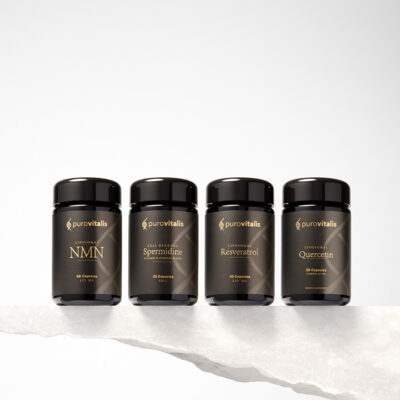
- Cellular energy & NAD+ Boosters (NMN / NR): Rather than forcing hormone release, boosting your cellular NAD+ levels restores natural mitochondrial energy, DNA repair, and metabolic vitality from within.
- Autophagy & Cellular Renewal (Spermidine): Spermidine triggers autophagy—your body’s natural cellular cleanup process—helping clear out aged, dysfunctional cells just as anti-aging peptides aim to do.
- Natural skin & tissue support (hydrolyzed collagen peptides): Supplementing with clean, European-sourced bovine collagen peptides provides the exact amino acid matrix your body requires to rebuild skin, cartilage, and connective tissues naturally.
- Master antioxidant protection (liposomal glutathione): Protect your tissues against systemic oxidative stress and inflammation with highly bioavailable liposomal antioxidants.
By focusing on clean, science-backed nutrients that work alongside your natural biology, you achieve sustainable, long-term healthspan extension—safely and confidently.
References
- Pettit, G. R. (1976). Synthetic Peptides. Elsevier Scientific Publishing Company.
- Banting, F. G., Best, C. H., Collip, J. B., Campbell, W. R., & Fletcher, A. A. (1922). Pancreatic extracts in the treatment of diabetes mellitus. Canadian Medical Association Journal, 12(3), 141.
- Proksch, E., Segger, D., Degwert, J., Schunck, M., Zague, V., & Oesser, S. (2014). Oral supplementation of specific collagen peptides has beneficial effects on human skin physiology: a double-blind, placebo-controlled study. Skin Pharmacology and Physiology, 27(1), 47-55.
- Pickart, L., & Margolina, A. (2018). Regenerative and protective actions of the GHK-Cu peptide in the light of the new gene data. Oxidative Medicine and Cellular Longevity, 2018.
- Al-dulaimi, S., Thomas, R., Matta, S., & Roberts, T. (2025). Epitalon increases telomere length in human cell lines through telomerase upregulation or ALT activity. Biogerontology, 26(5), 178.
- Sikiric, P., et al. (2016). Brain-gut axis and pentadecapeptide BPC 157: Theoretical and practical implications. Current Neuropharmacology, 14(8), 857-865. PubMed PMID: 23949208.
- Lee, C., et al. (2015). The mitochondrial-derived peptide MOTS-c promotes metabolic homeostasis and reduces obesity and insulin resistance. Cell Metabolism, 21(3), 443-454.
- Marshall, L., et al. (1997). Growth hormone-releasing hormone stimulates sleep and growth hormone release in humans. The Journal of Clinical Endocrinology & Metabolism, 82(5), 1478–1484. PubMed PMID: 9037203.
- Dubin, J. M., et al. (2021). Human chorionic gonadotropin treatment: a viable option for management of secondary hypogonadism and male infertility. Expert Review of Endocrinology & Metabolism, 16(1), 21–28. PubMed PMID: 33345656.
- Kingsberg, S. A., et al. (2019). Bremelanotide for the treatment of hypoactive sexual desire disorder: Two randomized Phase 3 trials. Obstetrics & Gynecology, 134(5), 899–908. PubMed PMID: 31599842.
- Gupta, A., et al. (2022). Thymosin beta-4: A potential therapy for tissue regeneration and repair. Journal of Cellular Physiology, 237(12), 4385–4398. PubMed PMID: 36375235.
- Jastreboff, A. M., et al. (2022). Tirzepatide once weekly for the treatment of obesity. New England Journal of Medicine, 387(1), 205–216. PubMed PMID: 35658024.

Track 50+ health metrics with AI-powered accuracy. Start your free trial today and take control of your wellness journey!
premium supplements Liposomal Technology made in EU Third party lab tested
Experience life to its fullest because you deserve the best! Try Purovitalis supplements!
Share: