

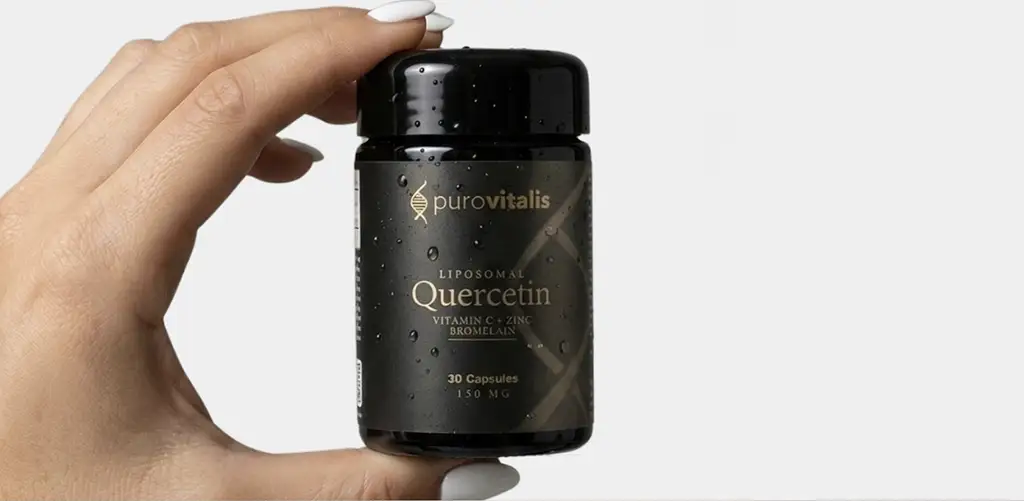
Longevity is not driven by one molecule alone, but by interconnected biological systems. Antioxidant defense, immune regulation, cellular stability, and inflammatory balance are all part of the same network.
That’s why we, at Purovitalis, carefully combine key ingredients such as bromelain, quercetin, vitamin C and zinc — focusing on how quercetin and zinc together support intracellular function, how a thoughtful quercetin vitamin C combo sustains antioxidant activity, and how the combined bromelain–quercetin benefits contribute to inflammatory balance within longevity research.
In this blog, we take a closer look at each compound, explore the science behind them, and explain how their combined action creates a more integrated approach to long-term health.
Read on to discover how these ingredients interact — and why their synergy matters.
table of contents
Quercetin for longevity
Quercetin is a naturally occurring flavonoid found in foods such as apples, red onions, capers, berries, kale, and broccoli. In plants, it functions as a protective compound against environmental stress as for example sunlight. In humans, it is primarily studied for its antioxidant properties, where it helps neutralize oxidative stress — a process closely linked to cellular aging.
Research indicates that quercetin interacts with pathways involved in inflammation regulation, immune signaling, and cellular stress responses. These mechanisms are central to many processes associated with age-related decline.
A comprehensive scientific review published in Foods ion 2025 highlights how dietary flavonoids are associated with cellular protection and long-term health outcomes, supporting their relevance in longevity research.
If you would like to explore the science in more detail, you can read our full guide here:
Quercetin: Benefits, dosage, and side effects explained
Healthspan benefits of zinc supplementation
Zinc is the second most abundant trace mineral in the human body after iron and is involved in more than 300 enzymatic reactions. Because the body does not store large amounts of zinc, consistent intake through diet or supplementation is necessary to maintain normal physiological function.
Zinc plays a central role in immune cell development, antioxidant defense, DNA repair, and cellular signaling. These processes are closely linked to biological aging, which is why zinc is frequently discussed in longevity research.
Did you know
Older adults are at increased risk of zinc insufficiency due to lower dietary intake and age-related changes in absorption. Research published in Immunity & Ageing highlights that inadequate zinc status is relatively common in ageing populations and may affect immune function over time.
Longevity benefits of vitamin C
Vitamin C is a water-soluble vitamin essential for multiple biological processes related to cellular protection and tissue maintenance. As well as with zinc, the body cannot synthesize or store large amounts of vitamin C, consistent intake is necessary to sustain normal physiological function.
Vitamin C plays a central role in antioxidant defense by neutralizing reactive oxygen species and reducing oxidative stress — a process closely associated with biological aging. Vitamin C is also required for collagen synthesis, supporting the structural integrity of skin, blood vessels, and connective tissue.
In addition, vitamin C contributes to both innate and adaptive immune function and helps regenerate other antioxidants within the body. Through its involvement in oxidative balance, collagen turnover, and immune resilience, vitamin C is frequently discussed in longevity research as a contributor to long-term cellular stability.
Vitamin C in the diet
Vitamin C is found in citrus fruits, berries, and vegetables such as red bell peppers, broccoli, Brussels sprouts, and kale. Since it is sensitive to heat, cooking can reduce its content.
Bromelain against aging
Bromelain is a natural enzyme complex extracted primarily from the stem and fruit of the pineapple plant. It contains proteolytic, protein-digesting enzymes and has been studied for its potential effects on inflammation, immune regulation, and tissue repair.
Interest in bromelain within aging research is largely linked to its role in inflammation regulation. Inflammation is a natural defense response, but when it becomes low-grade and persistent over time, it may contribute to age-related changes in tissues and organs.
A 2023 systematic review of clinical trials reported that bromelain supplementation was associated with reductions in inflammatory markers such as IL-6 and CRP in certain adult populations. These markers are measurable substances in the blood that indicate the level of inflammation in the body. A mechanistic study published in Cells in 2025 further showed that bromelain can influence signaling pathways involved in the production of cytokines — small signaling proteins used by the immune system to regulate inflammatory responses.
Because chronic low-grade inflammation is closely linked to biological aging, these findings have increased interest in bromelain within longevity research.
Read also: Understanding inflamm-aging: Age and inflammation
How do quercetin, zinc, vitamin C, and bromelain work together?
When quercetin, zinc, vitamin C, and bromelain are combined in one formulation, they complement each other through different biological mechanisms. They do not target the same pathway but instead act across digestion, cellular transport, antioxidant balance, and inflammation regulation.
Let have a look at what are the vitamin C, and bromelain quercetin, zinc benefits, when combined:
Quercetin and zinc – transport and intracellular function
A key interaction exists between quercetin and zinc together. Experimental studies show that quercetin can function as a zinc ionophore, meaning it can bind zinc and help transport it across the cell membrane.
This is relevant because many of zinc’s biological functions take place inside the cell — including its role in antioxidant enzymes, DNA stability, and immune regulation. When zinc is efficiently transported into the cell, it can more effectively participate in these processes. The combination of quercetin with zinc is therefore based on a biological mechanism in which quercetin supports zinc’s intracellular activity.
So could zinc and queretin as a combo together actually fight your next cold? The answer might be ‘yes’.
Quercetin and vitamin C – antioxidant cooperation
The interaction between quercetin and vitamin C in a combo is primarily biochemical. When quercetin neutralizes free radicals, it protects cells from oxidative stress by donating electrons to unstable molecules. In that process, quercetin changes its chemical structure — it becomes oxidized.
When quercetin becomes oxidized, it temporarily loses part of its antioxidant activity because it has “used” its protective capacity. Vitamin C plays an important role here. Research shows that vitamin C can regenerate oxidised quercetin and restore it to its active form.
This interaction means that a quercetin vitamin C combination may contribute to more sustained antioxidant protection. In addition, emerging discussions around quercetin vitamin C absorption suggest that vitamin C may help stabilize quercetin in its active form, potentially supporting its functional availability in the body.
At the same time, vitamin C supports collagen formation and normal immune function, adding a structural and functional dimension to the formulation.
The integrating role of bromelain
Combining quercetin with bromelain is a differeret story as bromelain adds a different dimension to the combination.
Rather than acting primarily as an antioxidant or mineral, it supports the overall biological context in which the other compounds function.
Bromelain is a group of proteolytic enzymes that function as digestive enzymes, supporting the breakdown of dietary proteins. In a multi-ingredient formulation, this may help create a supportive foundation for how nutrients and bioactive compounds are handled in the body.
In addition, bromelain’s documented interaction with inflammatory pathways aligns with the cellular and antioxidant roles of quercetin, zinc, and vitamin C. Instead of overlapping their effects, it complements them by supporting balance at a systemic level.
Together, this makes bromelain a connecting component in the formulation rather than a duplicate of the other ingredients.
Potential combination side effects
Bromelain may influence blood clotting mechanisms. While significant interactions are not well documented and appear to depend on dose, awareness of potential bromelain drug interactions is important, particularly for individuals using blood-thinning medication, who should consult a healthcare professional before supplementation.
Although the ingredients are generally well tolerated, dosage still matters. High zinc intake over time may affect copper balance, and larger amounts of vitamin C can cause mild digestive discomfort in some people. Rare bromelain quercetin side effects may include temporary stomach upset or sensitivity reactions.
These considerations highlight why formulation strategy is as important as ingredient selection.
The art of formulation at Purovitalis
A scientifically grounded supplement is not defined solely by its ingredients, but by how those ingredients are combined, dosed, and produced.
In the current formulation, quercetin, zinc, vitamin C, and bromelain are combined based on their complementary biological roles rather than overlapping effects. The proportions are designed to reflect the mechanistic interactions described earlier — including intracellular transport, antioxidant recycling, and inflammatory regulation.
Related: Quercetin and inflammation: Exploring the possibilities
Zinc and vitamin C both play roles in biological processes that are frequently discussed in longevity research, including antioxidant defense, immune regulation, and the maintenance of cellular stability over time. Their inclusion is therefore not based on trend, but on established physiological relevance. Quercetin contributes through its interaction with oxidative stress pathways, while bromelain supports the broader biological environment in which these processes occur.
Beyond ingredient synergy, attention is given to purity, raw material quality, and controlled manufacturing standards. Each batch is produced within established safety margins, ensuring consistency and reliability.
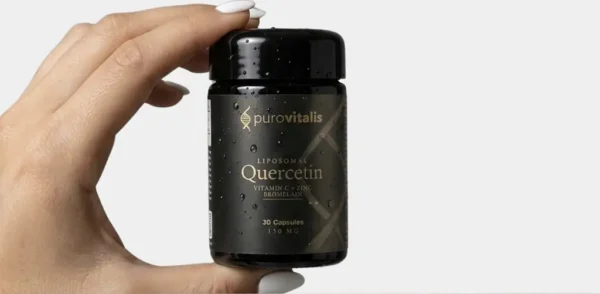
You can explore the full formulation, ingredient specifications, and available offers here: Liposomal Quercetin
References
- Aggarwal D, Chaudhary M, Mandotra SK, Tuli HS, Chauhan R, Joshi NC, et al. Anti-inflammatory potential of quercetin: From chemistry and mechanistic insight to nanoformulations. Curr Res Pharmacol Drug Discov. 2025;8:100217. doi:10.1016/j.crphar.2025.100217
- Duarte M, Pedrosa SS, Khusial PR, Madureira AR. The biological potential and health-benefits of flavonoids: A review and development opportunities. Chem Biol Interact. 2025;421:111755. doi:10.1016/j.cbi.2025.111755
- Ho E, Wong CP, King JC. Impact of zinc on DNA integrity and age-related inflammation. Free Radic Biol Med. 2022;178:391-397. doi:10.1016/j.freeradbiomed.2021.12.256
- [Forfattere ikke angivet]. Zinc deficiency as possible link between immunosenescence and age-related diseases. Immun Ageing. 2025;22:19.
- Carr AC, Maggini S. Vitamin C and immune function. Nutrients. 2017;9(11):1211. doi:10.3390/nu9111211
- Pereira IC, Vieira EES, Torres LRO, Silva FCC, Sousa JMC, Torres-Leal FL. Bromelain supplementation and inflammatory markers: A systematic review of clinical trials. Clin Nutr ESPEN. 2023;55:116-127. doi:10.1016/j.clnesp.2023.02.028
- Insuan O, Janchai P, Thongchuai B, Chaiwongsa R, Khamchun S, Saoin S, et al. Anti-inflammatory effect of pineapple rhizome bromelain through downregulation of the NF-κB- and MAPKs-signaling pathways in lipopolysaccharide (LPS)-stimulated RAW264.7 cells. Curr Issues Mol Biol. 2021;43(1):93-106. doi:10.3390/cimb43010008
- Dabbagh-Bazarbachi H, Clergeaud G, Quesada IM, Ortiz M, O’Sullivan CK, Fernández-Larrea JB. Zinc ionophore activity of quercetin and epigallocatechin-gallate: From Hepa 1-6 cells to a liposome model. J Agric Food Chem. 2014;62(32):8085-8093. doi:10.1021/jf5014633
- Boots AW, Haenen GRMM, Bast A. Health effects of quercetin: From antioxidant to nutraceutical. Eur J Pharmacol. 2008;585(2-3):325-337. doi:10.1016/j.ejphar.2008.03.008
premium supplements Liposomal Technology made in EU Third party lab tested
Experience life to its fullest because you deserve the best! Try Purovitalis supplements!
Share: