



Some nutrients get a lot of attention, while others do important work more quietly in the background. Vitamin K2 belongs to the latter. It helps activate key processes linked to calcium balance, which makes it relevant for bone health, vascular health, and the way we think about aging well. Interest in vitamin K2 has grown for a reason, especially as more research looks into its role in long-term health.
Read along this blog and understand what vitamin K2 does, how it works, and why it may be more relevant than many people realise.
table of contents
What is K2 and how it works
Vitamin K2 is part of the vitamin K family, a group of fat-soluble nutrients involved in essential processes in the body. While vitamin K1 is mainly known for its role in blood clotting, vitamin K2 has a more specific function related to calcium use.
Its main role is to activate certain proteins that depend on vitamin K to function properly. Two of the most important are osteocalcin and matrix Gla protein (MGP). Osteocalcin helps bind calcium to bones, while MGP plays a role in regulating calcium in blood vessels.
Without enough vitamin K2, these proteins may remain inactive. This does not stop calcium from being absorbed, but it can affect how efficiently it is used and where it ends up in the body.
So rather than acting as a standalone solution, vitamin K2 supports processes that are already in place, helping your body maintain a more balanced use of calcium over time.
In short
Vitamin K2 supports the proteins that move calcium into your bones and help keep it out of places where it is less useful, like blood vessels.
Vitamin K2 and longevity
Vitamin K2 is often mentioned in conversations around longevity, but not in the sense of directly extending lifespan. Its relevance comes from the systems it supports.
Several large population studies have found associations between higher intake of vitamin K2 and better long-term health outcomes. The Rotterdam Study, for example, showed that higher intake of menaquinones was linked to lower risk of cardiovascular disease and reduced mortality. Similar observations have been made in other cohorts.
These findings point to a broader pattern. Vitamin K2 appears to support areas of health that tend to change with age, such as vascular function and bone integrity.
At the same time, it is important to keep expectations realistic. These are associations, not proof of cause and effect. What they offer is direction, showing where vitamin K2 may play a role in supporting healthy aging over time.
Menaquinones
Menaquinones are the different forms of vitamin K2. Some of the best-known are MK-4 and MK-7, which are found in foods like cheese and fermented products, as well as in supplements.
Vitamin K2 benefits explained
The benefits of vitamin K2 are closely linked to its role in calcium metabolism. Instead of targeting one single function, it supports several systems that rely on proper calcium use.
Bone health
One of the most well-established roles of vitamin K2 is its contribution to bone health. By activating osteocalcin, it helps incorporate calcium into the bone structure. Clinical research has shown improvements in bone-related markers and maintenance of bone mineral density over time . This becomes more relevant with age, as bone loss gradually increases.
Cardiovascular health
Vitamin K2 is also connected to vascular health through its effect on matrix Gla protein (MGP). This protein helps regulate calcium in blood vessels. Observational studies have found that higher intake of vitamin K2 is associated with lower levels of arterial calcification and improved cardiovascular outcomes. While this does not establish a direct effect, it supports the importance of calcium balance in long-term heart health.
Blood clotting
Like all forms of vitamin K, K2 contributes to normal blood clotting. This is one of its most established functions and remains essential for everyday physiological processes.
Teeth and structural tissues
Because vitamin K2 plays a role in calcium distribution, it is often discussed in relation to teeth and other mineralized tissues. The research here is still developing, but the underlying mechanism supports its relevance.
Skin and general appearance
Interest in vitamin K2 for skin and overall appearance is growing. Some theories suggest that improved circulation and reduced calcium accumulation in soft tissues may play a role. However, evidence is still limited, and more research is needed.
Overall
Vitamin K2 is best known for its role in bone health, calcium balance, and normal blood clotting. Other areas, such as teeth, vascular health, and skin, are still being explored, but the early interest reflects how widely calcium regulation affects the body
Sources of K2
Vitamin K2 is not as widely available in the diet as vitamin K1, which is found in many green vegetables. This means your intake of K2 depends more on specific food choices.
Some of the most well-known sources of vitamin K2 include:
- Natto – one of the richest known sources of vitamin K2, especially MK-7
- Aged cheeses – often one of the main sources of K2 in Western diets
- Egg yolks – provide smaller but steady amounts
- Meat and organ meats – can contribute vitamin K2, though amounts vary
- Fermented foods – foods like kefir and sauerkraut may contain small amounts depending on how they are made
For those following a vegetarian diet, vitamin K2 intake can be harder to maintain through food alone. Some fermented plant-based foods contain K2, but amounts are usually lower than in animal-based or traditional fermented foods. Vegetables, on the other hand, mainly provide vitamin K1 rather than K2. Since intake can vary quite a lot from one diet to another, some people choose a supplement as a more consistent option.
Our tip
Start your morning with two eggs, which naturally contain small amounts of vitamin K2. For an afternoon snack, kefir with blueberries and nuts is an easy way to include another food that may provide K2, alongside protein, healthy fats, and fibre.
Related: Probiotics and prebiotics – the longevity impact explained
Vitamin K2 combinations, dosage, and side effects
Vitamin K2 is often used together with other nutrients, especially vitamin D3. This reflects how these nutrients work in relation to calcium metabolism.
Vitamin D helps increase calcium absorption in the body. At the same time, vitamin K2 activates proteins that help guide calcium into bones. Research describes this as a functional interaction, where both nutrients support different parts of the same process.
There is no universally agreed daily intake for vitamin K2 alone. However, many supplements provide between 100 and 200 micrograms of the MK-7 form, which remains active in the body for longer periods.
Magnesium is sometimes included alongside vitamin K2 and vitamin D, as it supports several metabolic processes, including those related to bone health.
In terms of safety, vitamin K2 is generally well tolerated when used in typical amounts. Side effects are rare. However, people who take blood-thinning medication should be cautious, as vitamin K can interfere with these treatments.
As with most nutrients, consistency and balance are more relevant than high doses.
Read also: Vitamin D3 and biological aging: What a 4-year study reveals about telomeres
K2 in Purovitalis liposomal D3
At Purovitalis, we focus on how nutrients work together in a practical, everyday context.
Vitamin D3 plays a key role in calcium absorption. It helps your body take in calcium and make it available for use. But absorption is only one part of the process.
Research shows that vitamin D also increases the production of proteins involved in calcium metabolism. These proteins, including osteocalcin, require vitamin K to become fully active. Without that activation, the process remains incomplete.
This is where vitamin K2 becomes relevant. It supports the activation of these proteins and contributes to a more balanced use of calcium in the body.
Our liposomal vitamin D3 is designed to support absorption and consistency. Combined with a broader understanding of nutrients like vitamin K2, it becomes part of a simple and reliable approach to long-term health.
We focus on clarity and function, so you can build a routine that supports how you feel and function over time.
References
- Shearer MJ, Newman P. Metabolism and cell biology of vitamin K. Thromb Haemost. 2008;100(4):530–47.
- Geleijnse JM, Vermeer C, Grobbee DE, Schurgers LJ, Knapen MHJ, van der Meer IM, et al. Dietary intake of menaquinone is associated with reduced risk of coronary heart disease: The Rotterdam Study. J Nutr. 2004;134(11):3100–5.
- Gast GC, de Roos NM, Sluijs I, Bots ML, Beulens JWJ, Geleijnse JM, et al. A high menaquinone intake reduces the incidence of coronary heart disease. Nutr Metab Cardiovasc Dis. 2009;19(7):504–10.
- Knapen MHJ, Drummen NEA, Smit E, Vermeer C, Theuwissen E. Three-year low-dose menaquinone-7 supplementation helps decrease bone loss in healthy postmenopausal women. Osteoporos Int. 2013;24(9):2499–507.
- van Ballegooijen AJ, Pilz S, Tomaschitz A, Grübler MR, Verheyen N. The synergistic interplay between vitamins D and K for bone and cardiovascular health: a narrative review. Int J Endocrinol. 2017;2017:7454376.
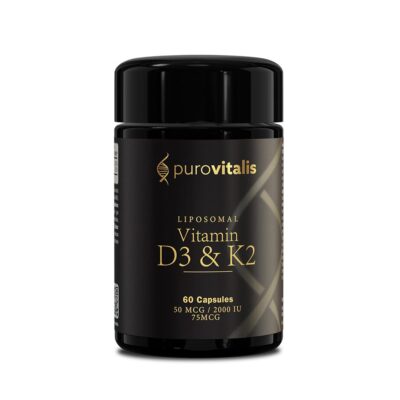
Vitamin D3 2000 IU liposomal delivery maximum bioavailability Immune Enhancer
Strengthen your immune system and promote bone health with Liposomal Vitamin D3! Try it out!

Track 50+ health metrics with AI-powered accuracy. Start your free trial today and take control of your wellness journey!
Share: